 Skip to content
In Florida, roofing permits often require multiple in-progress inspections, including dry-in and flashing verification. In practice, however, these inspections are sometimes missed or covered before a Building Official is able to observe the work.
When this happens, local jurisdictions may require a Florida Professional Engineer (PE) to perform a retroactive review and issue a certification confirming whether the installed roofing system complies with applicable code requirements.
This process is commonly referred to as an after-the-fact roof inspection, and it is strictly administrative in nature — focused on permit compliance, not performance evaluation.
Why After-the-Fact Roof Inspections Are Sometimes Required
Missed inspections can occur for many reasons:
- Scheduling conflicts
- Weather delays
- Emergency repairs
- Ownership or contractor changes
- Work completed before inspection availability
When roofing work has already been completed and concealed, Building Officials may request an engineer’s certification to support permit close-out, rather than requiring full removal or replacement of the roof system.
What Engineers Verify (At a High Level)
After-the-fact roof inspections are not forensic investigations and are not warranties. Instead, they rely on a combination of documentation review and controlled field observation.
Typical verification may include:
- Review of permit records and product approvals
- Evaluation of available construction photographs
- Final non-invasive visual roof inspection
- Limited invasive verification, when appropriate and coordinated with the contractor
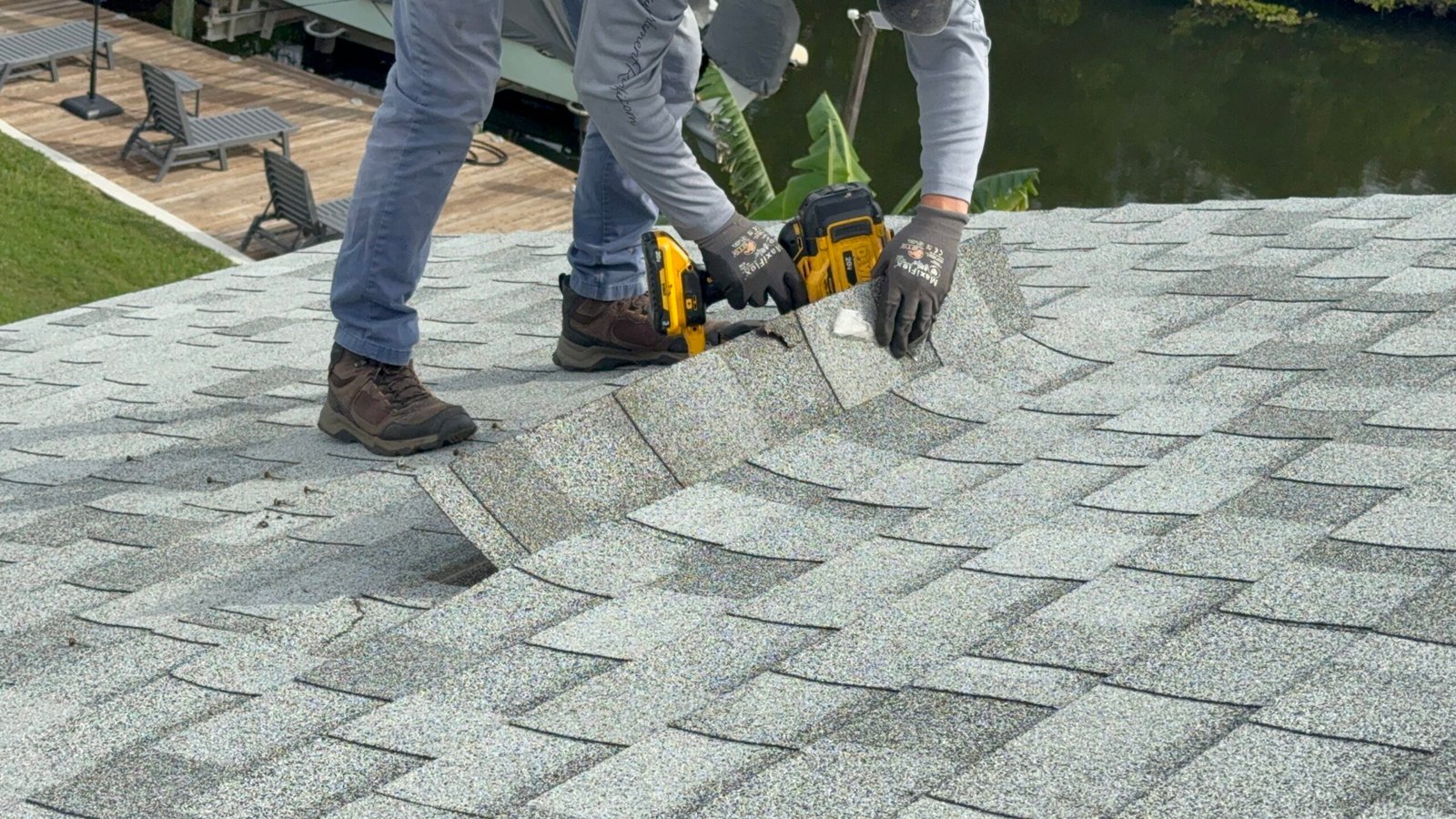
Limited invasive verification may involve the temporary removal of a small section of shingles to visually confirm:
- Underlayment type
- Shingle fastening pattern
- Installation sequencing assumptions used for permit compliance
All temporarily exposed areas are restored immediately following verification.
This approach allows engineers to confirm code-required elements without destructive testing or wholesale roof removal.
What “Limited Invasive Verification” Means (and What It Doesn’t)

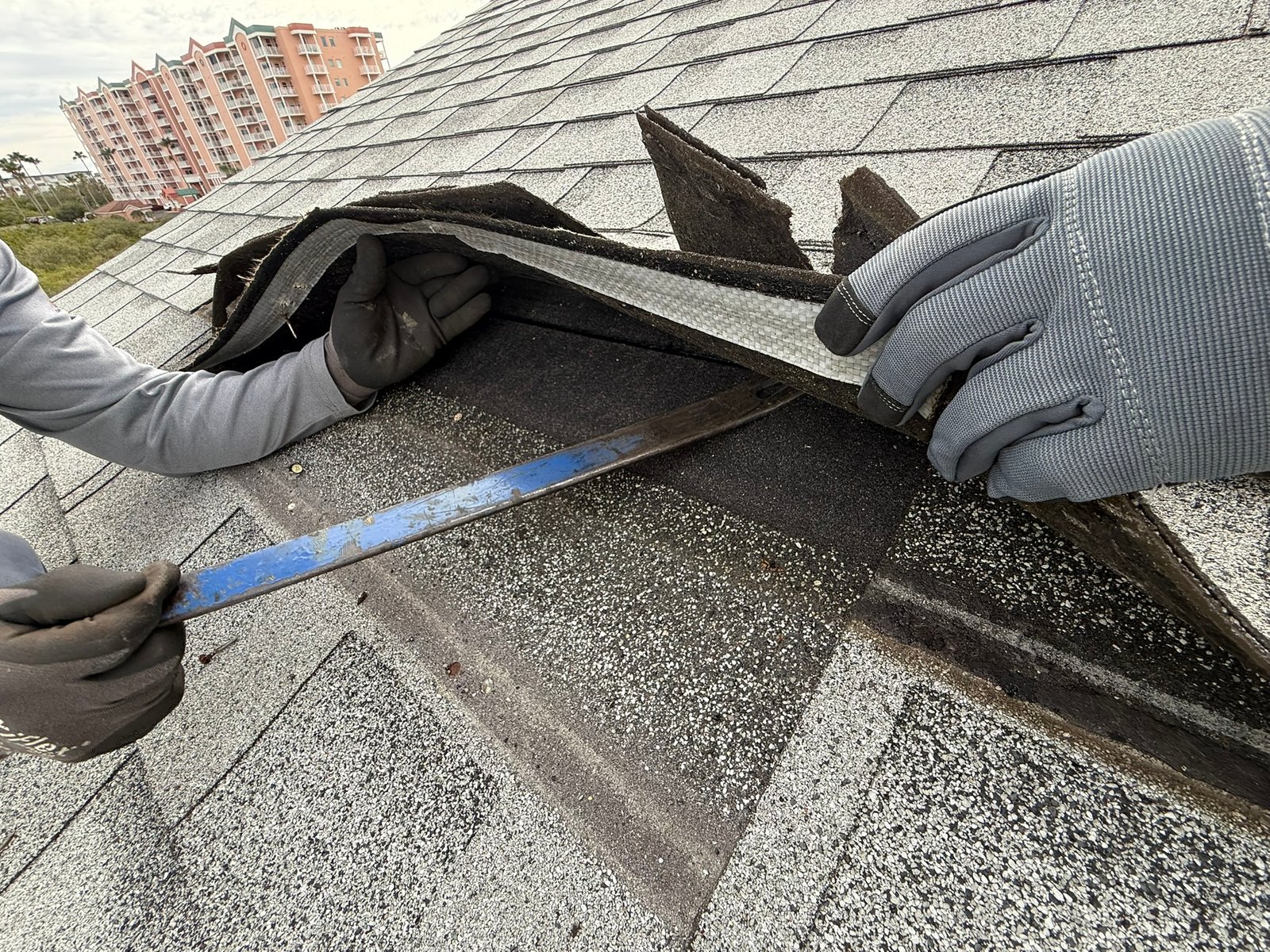

The photos shown above document a controlled, limited exposure of the roofing assembly performed solely to confirm installation characteristics relevant to permitting.
This process is:
- Targeted
- Non-destructive
- Coordinated with a licensed contractor
- Restored immediately after verification
It does not include:
- Leak investigation
- Building envelope performance analysis
- Moisture intrusion diagnostics
- Insurance causation or damage assessment
What Is Explicitly Outside the Scope
For clarity and transparency, after-the-fact roof inspections do not address:
- Roofing warranties or remaining service life
- Past, present, or future water intrusion
- Interior finishes or ceiling conditions
- Hidden or inaccessible conditions not exposed
- Insurance-related determinations
The engineer’s role is limited to assessing whether the observable and verified conditions reasonably align with applicable Florida Building Code requirements for permit purposes.
Why This Process Matters
For owners and contractors, an engineer-led after-the-fact inspection can:
- Avoid unnecessary roof removal
- Prevent costly re-roofing solely for inspection access
- Provide a clear path to permit close-out
- Reduce administrative delays with AHJs
For Building Officials, it provides a documented, professional basis to evaluate compliance when standard inspection timing was not possible.
Professional, Permit-Focused Engineering Review
At Oasis Engineering, after-the-fact roof inspections are performed with a conservative, code-driven approach that prioritizes:
- Documentation
- Verification (not assumption)
- Clear scope boundaries
- Florida Building Code compliance
Each certification is prepared based on the specific permit, roof system, and site conditions involved.
Need Help Closing a Roofing Permit?
If you have an open, expired, or stalled roofing permit and have been asked to provide an engineer’s certification, we can help determine whether an after-the-fact inspection is appropriate for your project.
📞 Call: 813-694-8989
📧 Email: info@oasisengineering.com
📝 Contact Form: www.oasisengineering.com/lets-get-in-touch-permit-letter
