Consulting

Underlayment Installation Over Existing Self-Adhered Roofing

🏠 Underlayment Installation Over Existing Self-Adhered Roofing – What Happens When It Can’t Be Removed?

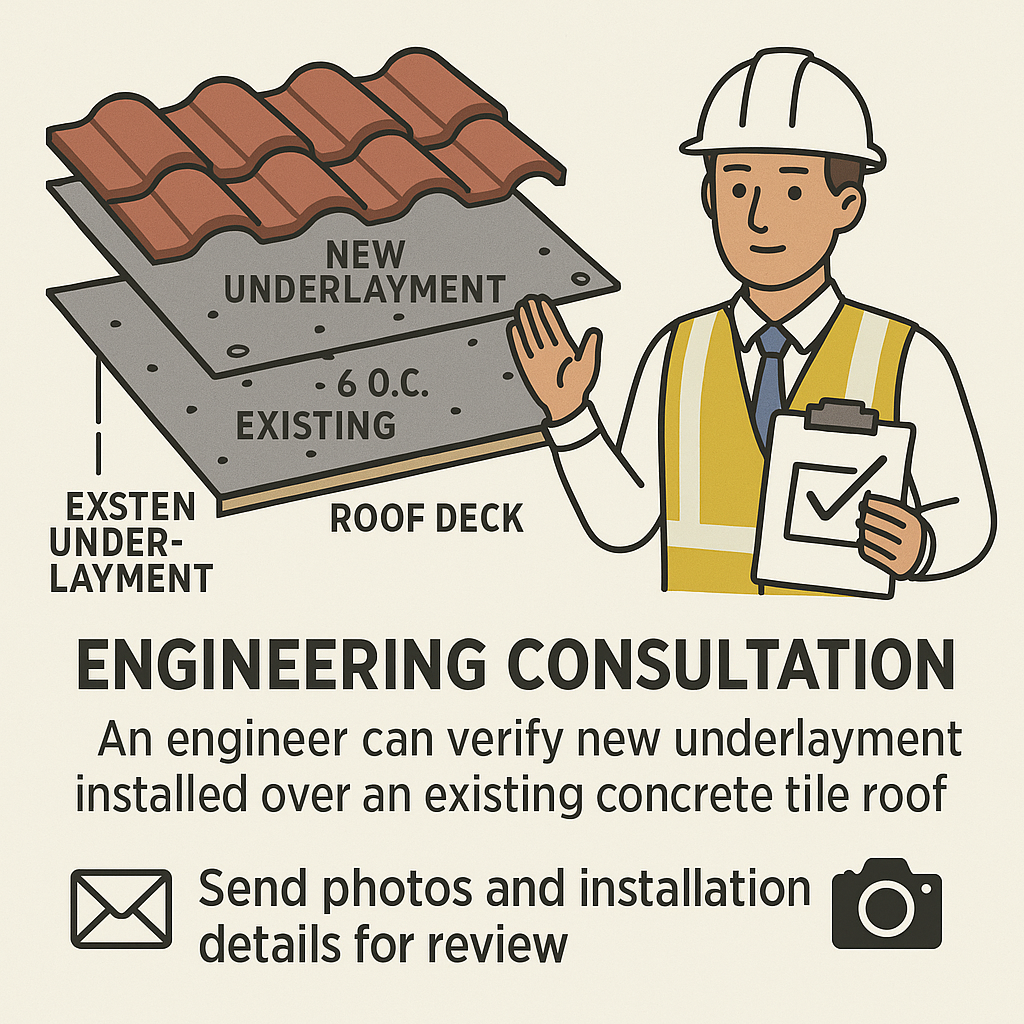
🏠 Underlayment Installation Over Existing Self-Adhered Roofing – What Happens When It Can’t Be Removed? Roofers and homeowners often face a tricky situation during re-roof projects involving self-adhered underlayments—like Polystick TU Plus—that are nearly impossible to remove. So what happens when the original underlayment can’t be taken off? Can a new layer be applied on top? Will inspectors approve it? At Oasis Engineering, we recently helped a client resolve this exact issue during a concrete tile roof replacement. Below, we break down the problem, code considerations, and how our Engineering Letter of Certification service can help you move forward—even if inspections were missed or the dry-in stage has already been completed. ❗ The Problem: Existing Polystick TU Plus Underlayment Wouldn’t Come Off During tear-off, the roofing crew found the existing underlayment (Polystick TU Plus) was fully adhered to the plywood decking. It was bonded so strongly that removal risked damaging the structural deck. To avoid delay, the crew: This created a two-ply system—but raised concerns when it came time for inspection. 🛑 Why Inspectors Flag This Most roofing approvals assume direct application of the underlayment to bare wood decking. Overlaying one layer over another isn’t a standard install in product documentation—so inspectors may hesitate to approve it without additional engineering justification. If the dry-in was completed without calling for inspection—or if the tile has already been installed—some jurisdictions may require a certified engineering letter to verify that the installation still meets Florida Building Code (FBC) requirements. ✅ How We Help: Engineering Letter for Dry-In Approval At Oasis Engineering, we provide certified engineering consultation and dry-in letters for cases just like this. Our process includes: This allows homeowners and contractors to pass inspection, even when conditions on site vary from standard installation manuals. 💬 Common Scenarios Where This Applies 📩 Need Help? Here’s How to Start If you’re dealing with a similar situation, we can help. Here’s what to do: Send it all to us via our form:👉 Submit your roofing request here Or reach out directly via email for urgent help. 🧠 Final Word Overlaying underlayment isn’t ideal—but it can be code-compliant when done correctly and with the right engineering review. Don’t let an inspection delay derail your roofing project. With Oasis Engineering, you get: Let us help you close that permit and move forward with confidence.

🏠 Underlayment Installation Over Existing Self-Adhered Roofing – What Happens When It Can’t Be Removed? Read More »

✅ As-Built Foundation Certification for Pergola — McKinney, TX

✅ As-Built Foundation Certification for Pergola — McKinney, TX

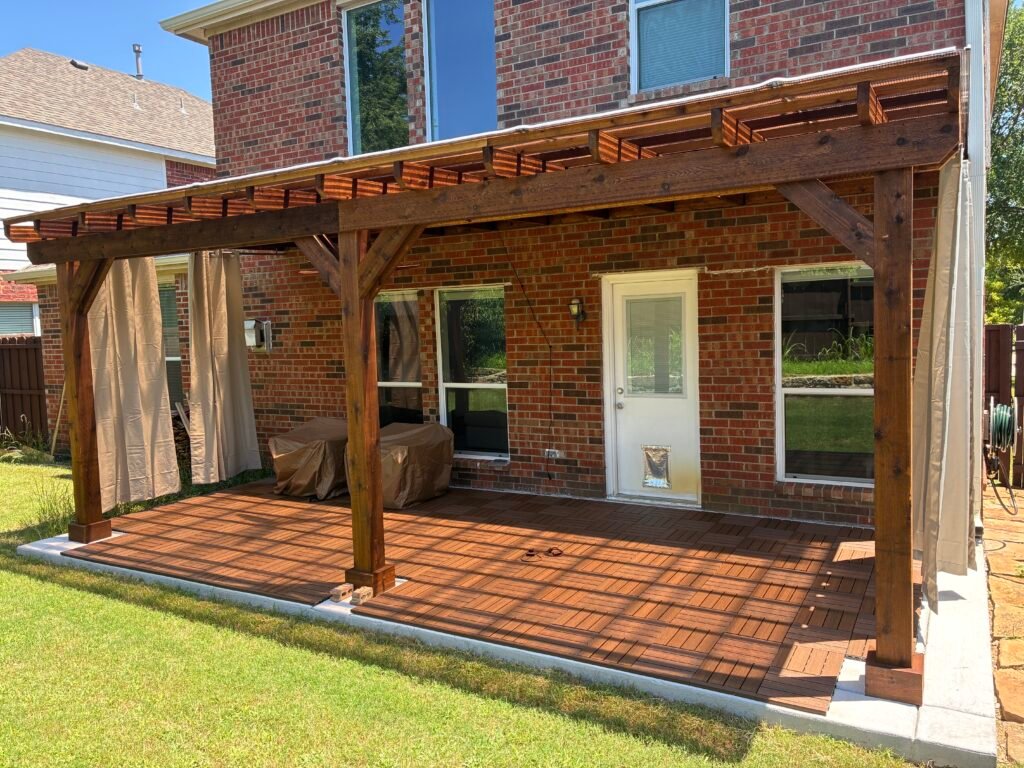
✅ As-Built Foundation Certification for Pergola — McKinney, TX Need an Engineering Letter for Your Pergola Foundation?In Texas, especially in growing communities like McKinney, many homeowners run into permit issues after completing work without inspections. If your contractor didn’t have a license or missed in-progress inspections during construction, the City may now require an As-Built Foundation Certification from a licensed Professional Engineer (PE). That’s where Oasis Engineering can help. We provide fast, reliable foundation engineering letters for residential accessory structures like pergolas, patios, and decks — helping homeowners meet permit requirements and avoid costly delays. 🏡 Project Example: Pergola Foundation Review — McKinney, TX In this McKinney project, a pergola was installed on an existing concrete patio without prior foundation inspections. The homeowner learned the City required: ✅ A certified engineering letter confirming the foundation’s adequacy.✅ A site-specific evaluation by a Texas-licensed Professional Engineer.✅ Documentation to satisfy permit and inspection requirements. Our client faced an all-too-common situation: 📏 Our Engineering Solution Oasis Engineering provided: ⚡ Important Notes About As-Built Certifications Every project is unique. Our foundation certification: ✅ Applies to residential accessory structures, like pergolas.✅ Confirms the foundation meets minimum standards for light structural loads.✅ Does not include full foundation design drawings (available upon request).✅ May require repairs or corrections if deficiencies are found during review. Oasis Engineering prioritizes compliance, safety, and transparency, ensuring homeowners meet City requirements without unnecessary hassle. 🎯 Need Your Pergola Foundation Certified? We provide fast, affordable As-Built Engineering Letters across Texas, including: ✔ McKinney✔ Dallas-Fort Worth Metroplex✔ Collin County and beyond Whether you missed inspections, changed contractors, or ran into permit challenges — we can help resolve your project. Order your Foundation Certification today. Contact Oasis Engineering to: ✅ Schedule your site review✅ Get a Texas PE-certified letter in as little as 1–3 business days✅ Move forward with City permits and approvals Don’t let missed inspections stall your project. Oasis Engineering delivers peace of mind — and permit compliance — with professional foundation evaluations for residential structures like pergolas and patios.

✅ As-Built Foundation Certification for Pergola — McKinney, TX Read More »

Eng Letter FAQ

Engineer Certification Letters — Common Questions | Oasis Engineering

What Is an Engineer Certification Letter? An engineer certification letter is an official document prepared by a licensed professional engineer (PE) that verifies the structural condition, code compliance, or safety of a specific element of your property. These letters are often required by building departments, insurance companies, lenders, or during real estate transactions. At Oasis Engineering, we specialize in providing engineer letters to help homeowners, builders, and developers resolve permit issues, document repairs, or meet state and local code requirements. Common Engineer Letters We Provide: ✅ Engineer Letter for Permit Closure If you’ve completed work without final inspections or your permit remains open, most jurisdictions require an engineer letter to close the permit. We inspect the work and, if compliant, issue a letter stating it meets applicable codes. ✅ Engineer Affidavit for Unpermitted Work Unpermitted work can delay property sales, refinancing, or trigger code enforcement. Our licensed engineers can inspect the work, assess code compliance, and provide an affidavit to help legalize the situation and support retroactive permits. ✅ Structural Engineer Letter for Code Compliance We routinely issue structural letters confirming that repairs, additions, or modifications meet applicable building codes—whether for walls, framing, foundations, or general structural safety. ✅ Foundation Certification Letters For manufactured or mobile homes, FHA loans, HUD programs, or county requirements often mandate a foundation certification. We provide engineer letters confirming the foundation meets permanent or regulatory requirements nationwide. ✅ Truss, Roof, or Structural Repair Letters Roof certifications and truss repair engineer letters are common after storm damage, leaks, or alterations. We inspect and certify repairs or existing conditions for insurance, real estate, or compliance purposes. ✅ Engineer Letters for Roofing In-Progress Inspections This letters can officially verify that the roofing work meets all required standards, serving as an acceptable substitute for the missing permit in-progress inspections from the City or County. When Do You Need an Engineer Letter? ☑ Permit closure for completed but uninspected work☑ Buying or selling a property with unpermitted improvements☑ Structural changes, repairs, or safety concerns☑ Manufactured/mobile home foundation certifications (HUD/FHA compliance)☑ Insurance claims after storm or accident damage☑ Meeting city or county code requirements If you’re unsure, we’re happy to review your situation. Can You Provide Engineer Letters Remotely? Yes—we offer remote or virtual engineer letters when allowed by code and based on documentation, photos, or site videos. For certain projects, especially when ample documentation, data, plans or reports are available, remote service saves time and money. For more complex or structural issues, an on-site inspection by our engineering team may be required. We’ll guide you through the best option. State-Specific Support: Florida Engineer Letter Requirements We are highly experienced with Florida’s permitting, storm damage assessments, and engineer affidavit needs. Whether you’re in Pasco, Tampa, or statewide, we understand Florida Building Code (FBC) and High-Velocity Hurricane Zone (HVHZ) requirements. Texas, Arizona, and Nationwide Engineer Letters Oasis Engineering supports Texas projects with foundation certifications, unpermitted work affidavits, and structural inspections. We are also licensed in multiple states, providing engineer certification letters for projects across the country. How Long Does It Take? Typical turnaround times vary by project type and location: ✔ Virtual/remote letters: 2-5 business days✔ On-site inspections and letters: 5-10 business days✔ Expedited options may be available—ask us! Why Choose Oasis Engineering? Need Help with Permits, Inspections, or Unpermitted Work? Whether you need a foundation certification, unpermitted work affidavit, storm damage assessment, or general structural engineer letter—we’re here to help. Contact Oasis Engineering today to resolve your permit, compliance, or property certification needs.

Engineer Certification Letters — Common Questions | Oasis Engineering Read More »

city of st pete affidavit infopic

Can You Skip Permits with an Engineer’s Affidavit in St. Pete? Here’s the Truth.

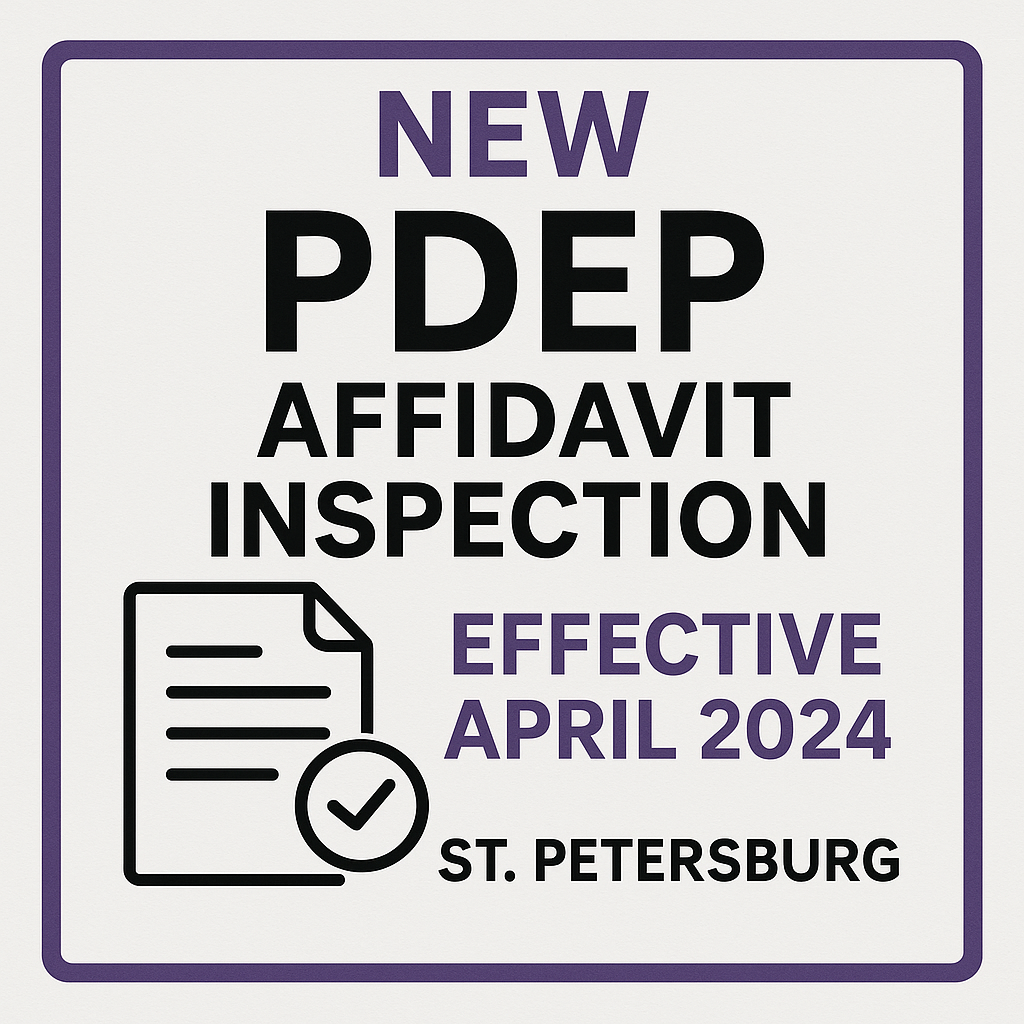
Can You Skip Permits with an Engineer’s Affidavit in St. Pete? Here’s the Truth. After a hurricane or flood, dealing with home repairs in St. Petersburg can be stressful. You may have come across advice—sometimes from AI tools like ChatGPT—that says you can “skip permits” by hiring a licensed engineer to complete an affidavit inspection report. But that’s NOT how the process really works. Let’s set the record straight. Understanding St. Pete’s Post-Disaster Expedited Permitting (PDEP) The City of St. Petersburg created the PDEP program to help homeowners resolve unpermitted storm repairs efficiently. But “efficient” doesn’t mean “permit-free.” If you repaired your home after a storm without pulling permits for items like: …then the City requires you to resolve this before selling your home or finalizing insurance claims. Your Two Options — But Read the Fine Print Option 1: Hire a General Contractor (GC)✔ GC pulls after-the-fact permits✔ GC coordinates inspections — may involve opening up walls or finished areas✔ Typical timeline: 4–8 weeks or more Option 2: Hire a Licensed Engineer for an Affidavit Inspection Report✔ Engineer inspects finished work and prepares a sealed report✔ BUT — This report must be tied to an active, issued permit✔ Without a valid permit number, the City cannot accept the affidavit Common Misconception: “Affidavit = No Permits Needed” We’ve seen this confusion firsthand—some homeowners are told (even by AI summaries) that hiring an engineer eliminates the need for permits. Unfortunately, that’s inaccurate and can delay your project. You still need: Once permits are active, a licensed engineer can:✔ Inspect finished work✔ Prepare the Affidavit✔ Submit the report referencing the correct permit How to Avoid Delays Here’s the recommended process: Skipping steps may result in rejection, more delays, or compliance issues. Final Word: Be Cautious with AI Summaries AI tools like ChatGPT can be helpful, but they don’t always reflect your city’s current building code or permitting requirements. Always double-check with a licensed professional before making decisions. If you’re facing a PDEP situation in St. Pete and need expert guidance:✅ Oasis Engineering can assist with engineering affidavits.✅ We recommend trusted permit expediters to streamline the process of obtaining the permit itself. Let’s keep your home compliant, safe, and ready for sale — the right way.

Can You Skip Permits with an Engineer’s Affidavit in St. Pete? Here’s the Truth. Read More »

Expired Permit Solutions in Florida: How Engineer Letters Can Help

Understanding Expired Permits in Florida Expired or abandoned permits have become a critical hurdle in real estate transactions. Title companies now require all open, expired, or abandoned permits to be fully closed before a property can change hands. Without resolution, sales can stall or even fall through—leading to costly delays. Florida addressed this issue with HB 447, amending Florida Statute 553.79 on June 6, 2019, to outline clear methods for permit closeout. As a licensed engineer, you can leverage these provisions to certify code compliance and facilitate transactions smoothly. HB 447 and Florida Statute 553.79: Key Provisions Florida Statute 553.79 (as updated by HB 447) provides three primary routes to close out an expired permit: Each option addresses different scenarios—whether the work is concealed, accessible for inspection, or involves potential safety hazards. 1. Affidavit Inspection Report When a permit has expired and the work is covered (e.g., walls closed or utilities concealed), direct inspection by city staff is impossible. In these cases, the statute permits a Florida-registered architect or engineer to: This is often the fastest and most cost-effective path, especially for minor electrical, plumbing, or mechanical work that was never inspected due to scheduling or contractor oversight. 2. Re-opening the Permit for City Inspection If the property owner prefers a formal re-inspection, Florida law allows the permit to be re-opened. The owner must: This route is often chosen for straightforward work like water-heater replacements or A/C change-outs where uncovering the installation is practical and preserves the original inspection process. 3. Safety Review for Structural, Roofing, and Hazardous Trades Permits involving structural, roofing, mechanical, electrical, plumbing, or gas work carry higher risk. These cannot be closed out solely via the statutory six-year old-permit exemption. Instead, the code requires: This ensures public safety where non-conforming work could pose significant threats. Why Use EngineerLetters.co for Your Affidavit Reports? At EngineerLetters.co, we specialize in preparing Affidavit Inspection Reports that meet Florida’s statutory requirements. Here’s how we add value: Whether you’re a homeowner, real estate professional, or contractor, partnering with EngineerLetters.co simplifies permit resolution and accelerates closings. Frequently Asked Questions Q: How long does an Affidavit Inspection Report take?A: Typically 1–5 business days from inspection scheduling to delivery of the signed affidavit. Q: Can I use an affidavit for major structural repairs?A: Yes—but if the work involves potential safety hazards, a full inspection by a licensed engineer or city inspector is required before closeout. Q: What if I uncover code violations during re-inspection?A: You’ll need to correct deficiencies to the original code and obtain final sign-off, or else follow up with an affidavit certifying corrective work. Take Action Today Don’t let an expired permit derail your property transaction. Trust EngineerLetters.co for fast, code-compliant Affidavit Inspection Reports under Florida Statute 553.79 (HB 447). Resolve expired permits efficiently, protect your closing dates, and ensure compliance with Florida’s building regulations—one letter at a time.

Expired Permit Solutions in Florida: How Engineer Letters Can Help Read More »

AI Assisted Engineering Support by Oasis engineering

Intelligence Amplified™: Engineering for DIY & AI Prep | Oasis Engineering

Intelligence Amplified™: A Professional Framework for AI-Assisted Engineering in the Public Interest Intelligence Amplified™ A Professional Framework for AI-Assisted Engineering in the Public Interest By: Enrique Lairet, PE Founder, Oasis Engineering LLC | www.oasisengineering.com Date: May 2025 Preface: Championing the Empowered Client The landscape of residential and small commercial projects is undergoing a remarkable transformation. We observe a surge in empowered homeowners, builders, and developers—the passionate DIY innovators—who are eager to take a more active and informed role in bringing their visions to life. This white paper is a testament to Oasis Engineering’s commitment to supporting this inspiring movement. We believe technology, including AI, should serve to amplify human ingenuity, not replace it. Intelligence Amplified™ is our client-first framework, meticulously designed to integrate the preparatory work of clients using modern tools with the indispensable expertise and rigorous review of professional engineering. Our goal is to make high-quality engineering more accessible, transparent, and collaborative, especially for those who are hands-on with their projects. Executive Summary Driven by the rise of the DIY spirit and the increasing accessibility of artificial intelligence tools, clients and professionals are seeking new avenues for efficient, affordable, and transparent collaboration in engineering. At Oasis Engineering, we’ve developed Intelligence Amplified™ (IA) — a rigorous, ethics-centered framework. This model integrates AI-assisted client submissions with redundant, independent professional engineering review, particularly tailored for residential and small commercial projects. This white paper outlines the operational, ethical, and legal backbone of our IA-as-a-Service™ model. It combines client-generated insights and AI-drafted inputs with multi-layered engineer verification and internal AI models trained on synthetic test data for quality assurance. We champion clear professional boundaries and robust liability protections. While we embrace innovation, our duty as licensed engineers to ensure public safety remains paramount. This document serves as both a thought leadership position and a defensible record of our process for regulatory bodies, legal scrutiny, and our industry peers. 1. The Catalyst: Empowering DIY with Engineering Insight A new era of project engagement is dawning, especially within the residential and small commercial sectors. Empowered individuals—homeowners, small builders, and innovative developers—are increasingly taking the helm, utilizing accessible digital tools to shape their projects from inception. They are leveraging diverse resources, including AI platforms like ChatGPT and Claude, to: Explore permit requirements and zoning ordinances Draft initial Requests for Information (RFIs) Interpret local building codes and standards Propose preliminary structural or system solutions This proactive, hands-on approach is not just a fleeting trend; it’s a growing movement we actively support. The critical question is no longer if this will become standard practice—it already has. The real challenge, and our central focus, is how to seamlessly and responsibly integrate these client-driven explorations with the rigorous, non-negotiable standards of professional engineering. Our Intelligence Amplified™ Protocol is designed to meet this challenge head-on, ensuring safety, compliance, and quality. 2. Intelligence Amplified™: Our Collaborative Framework Intelligence Amplified™ is fundamentally a collaborative review protocol, not an automation engine. It’s a structured approach that enhances the capabilities of both the client and the engineer. Our framework empowers clients, especially those embracing the DIY approach, to contribute: Their detailed project description, vision, and specific objectives. Preliminary solutions or concepts, potentially explored using public code references or AI tools. All relevant data, sketches, photographs, site plans, and supporting documentation. Oasis Engineering then performs its core professional duties: We independently verify all information and assumptions. We cross-check any AI-assisted interpretations against fundamental engineering principles and current codes. We issue certified engineering documentation based solely on our independent professional judgment and analysis. Crucially, Oasis Engineering does not certify AI-generated outputs. We certify our professional engineering conclusions, derived from meticulous independent analysis and verification. 3. The IA-as-a-Service™ Workflow: Precision in Practice Our IA-as-a-Service™ model translates the Intelligence Amplified™ philosophy into a clear, actionable workflow, fostering a transparent and efficient partnership: Client Responsibilities: Provide a detailed problem statement, project scope, or specific request. Optionally share any AI prompts or tools used (e.g., GPT-4, Claude outputs), along with the source material. Include all essential supporting documentation: photos, site plans, material specifications, soil reports, etc. Clarify their own reasoning, design intent, or interpretation where applicable, fostering a richer understanding. Oasis Engineering Responsibilities: Perform independent engineering calculations, often employing two to three distinct layers of analysis per project for robust verification. Utilize proprietary in-house AI tools, trained on curated synthetic datasets, for comparative model verification and quality assurance. Implement stringent guardrails to prevent over-reliance on AI-generated logic and to identify potential “hallucinations” or inaccuracies. Thoroughly review all client-provided materials for legitimacy, traceability, data integrity, and completeness. Multi-Layered Verification – Our Commitment to Safety: Manual engineering review of all inputs, assumptions, and client-provided data. Independent calculations and code-based cross-checks performed by our engineers. Internal AI-assisted Quality Assurance (QA) using Oasis-trained models, fed with vetted synthetic data to test against various scenarios. Final professional oversight and certifying decision by a licensed Professional Engineer (PE). No document is ever sealed or issued without successfully completing this comprehensive protocol. 4. Legal Boundaries & Professional Accountability Navigating the integration of client-prepared, AI-assisted information demands unwavering clarity on legal responsibilities and ethical conduct. Our framework is built to uphold the highest standards of professional accountability. Liability Shielding for Licensed Engineers: All stamped and sealed deliverables from Oasis Engineering adhere to these principles: They are based solely on the independent professional judgment and calculations of our licensed engineers. They include a clear disclaimer stating that any client-submitted AI content was reviewed as supplementary information but not relied upon as a basis for engineering decisions. Code compliance and public safety remain the unequivocal standards for all approvals and certifications. Legal Disclaimer on All Deliverables: “This document was reviewed and certified solely on the basis of professional engineering judgment. While client submissions may have included AI-assisted analysis or prompts, all conclusions herein were reached using Oasis Engineering’s independent multi-step verification process. This process includes internal redundancy checks, synthetic-data model validations, and licensed professional oversight. All supporting documentation was reviewed for traceability and legitimacy. No AI-generated content was used as a

Intelligence Amplified™: Engineering for DIY & AI Prep | Oasis Engineering Read More »

Pool Deck Inspection

🛠️ Pool Deck Inspections: What You Need to Know Before You Build – Pinellas County & Beyond

🛠️ Pool Deck Inspections: What You Need to Know Before You Build – Pinellas County & Beyond Adding a deck around your pool is a great way to increase both functionality and safety—but did you know that even a simple wood or composite pool deck often requires multiple building inspections to pass code? This guide walks you through the typical required inspections for pool decking projects based on local requirements in Pinellas County, Florida, but it’s also applicable to most Florida counties and other jurisdictions that follow the Florida Building Code (FBC). ✅ Summary: What Inspections Are Required for Pool Deck Construction? If you’re building or already built a wood or composite deck around your pool, you’ll usually need the following building inspections: Inspection Code When It’s Needed Footing 1002 Before concrete is poured for any posts or foundation piers Framing 1016 After joists and beams are installed but before decking boards are placed Deck 1032 After full installation of the deck boards, stairs, railings, etc. Final 1099 When all work is complete and ready for final review Depending on your specific project scope and local enforcement, you may also need electrical or plumbing inspections if lighting, pumps, or outlets are being added. These inspection codes are specific for Pinellas County, and note that depending on project complexity, or site specific concerns, additional inspections may be required. 📍 Pinellas County Example In Pinellas County, FL, inspections are scheduled through the local Building Services Department. Here’s what the process typically looks like: If the deck is already built without permits, an “after-the-fact” permit can be submitted, but you may be required to expose structural components (like footings or framing) for visual inspection or provide an engineer’s certification. 👷 Why Are These Inspections Important? Each inspection serves a purpose: Skipping any of these steps can lead to failed inspections, fines, or future liability if the structure is ever questioned during a home sale or appraisal. The approval is typically based on the review of the applicable engineering plans, details or permitted construction requirements. 📎 FAQ: Common Questions We Get Q: Do I need a permit for a small wood deck around my pool?Yes—typically, if the deck is more than 30 inches off the ground or attached to a structure, it’s considered a structural addition and requires a permit. Q: Can Oasis Engineering help with this?Absolutely. We provide engineering plans, site visits, and inspection coordination to help get your project compliant and approved. Q: What if my deck is already built?You’ll likely need an engineering inspection report, or an engineer letter and may need to uncover certain areas to show framing or footing conditions. We can help prepare the report and work with the building department on your behalf.

🛠️ Pool Deck Inspections: What You Need to Know Before You Build – Pinellas County & Beyond Read More »

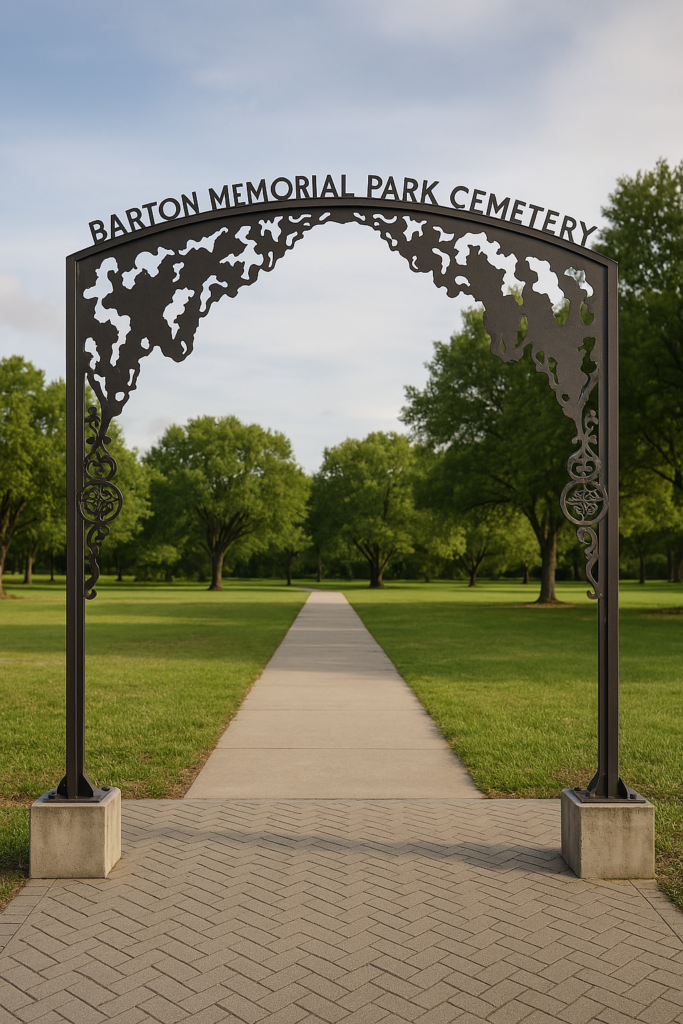
Barton Memorial Park Cemetery Archway

Engineering Support for Historic Archway at Barton Memorial Park Cemetery – Preserving Culture Through Design

At Oasis Engineering, we take pride in providing engineering that does more than just meet code — we support projects that carry meaning, serve communities, and help preserve local history. One recent example is our work on the new entrance archway at Barton Memorial Park Cemetery in Boynton Beach, Florida. A Project with Purpose Barton Memorial Park Cemetery isn’t just a resting place — it’s a historic landmark. Once known as Cherry Hill, this cemetery is believed to be Boynton Beach’s first African-American burial ground, dating back to the early 1900s. Many of the people buried there were of Bahamian descent and among the city’s early pioneers. For years, the cemetery was neglected, especially during the construction of I-95 in the 1970s, but through community efforts and city recognition, it has since been restored and protected as part of the Boynton Beach Heritage Trail. When a new steel archway was proposed to honor the site’s history and create a welcoming entrance for visitors, we were honored to be part of the team that made it possible. Our Role: Structural Support for a Cultural Landmark We were brought into the project to provide structural engineering consulting and help ensure that this new feature would be safe, durable, and built to last. Our team delivered a comprehensive engineering package that included: More Than Metal and Concrete Yes — this project involved structural math, load paths, and code references. But more than that, it was about preserving legacy and creating something beautiful and respectful for the community. We believe that engineering should not only be functional — it should serve people. And when it’s done right, it helps elevate public spaces, honor stories, and protect the future by building on the past. Need structural engineering for your public art or monument project?We’d love to support your vision. Visit our Public Art & Monument Engineering page or contact us to learn more.

Engineering Support for Historic Archway at Barton Memorial Park Cemetery – Preserving Culture Through Design Read More »

engineer inspection letter 2

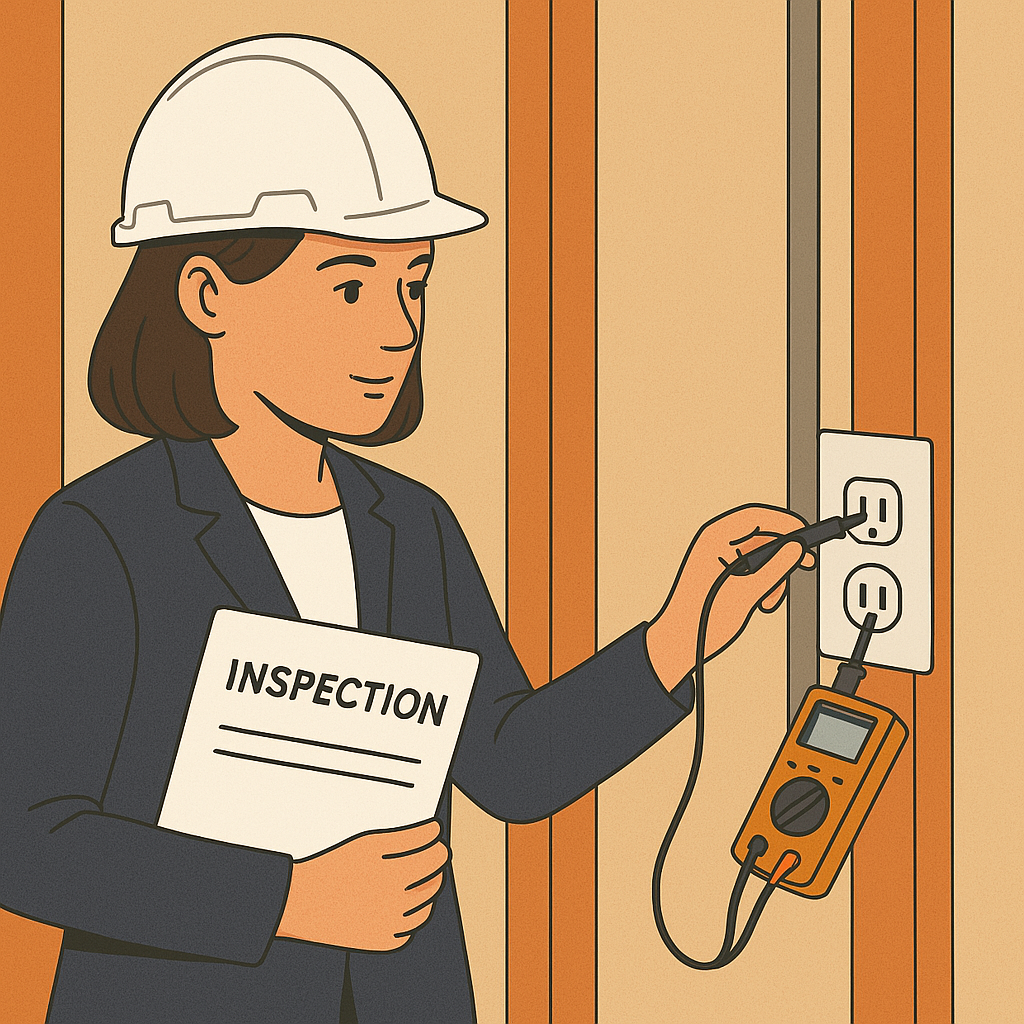
Need a Covered Work Letter from an Engineer? Here’s What You Need to Know About Missed Inspections and How We Can Help

If you’ve received a comment on your building permit that sounds something like this: “Need covered work letter form an engineer to sign off on the following missed inspections: ELE-rough-in, PLB-rough-in, PLB-tub-set, and PLB-underground. Once the letter has been uploaded, signed and sealed, reschedule this inspection. You may also elect to open up and expose all of the covered work elements.” You’re not alone—and you’re in the right place. At Oasis Engineering, we help homeowners, contractors, and builders resolve these exact issues quickly, professionally, and in full compliance with your local building department. 🚨 What Does This Mean? When your inspector notes this on your permit, it means that certain required inspections were not completed before the work was covered up (drywalled, backfilled, or tiled over). This is most common in remodels involving: If you don’t have photo documentation or can’t open the walls or floors, the city will require a licensed professional engineer to inspect and certify the work in its current state. This is what’s called a Covered Work Letter or Engineer Letter for Missed Inspection. 🛠️ How Did This Happen? There are a few common reasons this happens: No matter the reason, once the work is covered, the inspector cannot verify it meets code—unless a licensed engineer steps in. ✅ How We Help At Oasis Engineering, we specialize in Engineer Letters for Covered Work. Here’s what we do: In most cases, this can save you from having to rip open walls or dig up floors—saving thousands in repair costs. 🧾 Common Searches That Lead Here If you searched for any of the following, you’re in the right place: 📍 We Serve All 50 States Whether your project is in Texas, Florida, Arizona, Georgia, or Washington, we have licensed engineers in our network ready to assist with: We also offer fast turnaround, digital sealing, and direct upload support to your permitting department where allowed. 👷 Let’s Get Your Permit Back on Track You don’t need to panic or tear everything open – specially if you have photos or additional documentation. A licensed engineer’s letter can satisfy the inspector and keep your project moving forward. 📞 Call or text us now at 813-694-8989📧 Or request your Covered Work Letter online using this Engineer Letter Form 💡 Pro Tip: If you’re doing a kitchen or bathroom remodel, always verify which inspections are required before closing up walls or floors. Save time and money with proper planning—or let us step in if it’s already covered.

Need a Covered Work Letter from an Engineer? Here’s What You Need to Know About Missed Inspections and How We Can Help Read More »