 Skip to content
Soil Compaction Testing & PE Certification
Fast, reliable, and code-compliant soil testing and PE-stamped certification for your foundation, driveway, or pad.
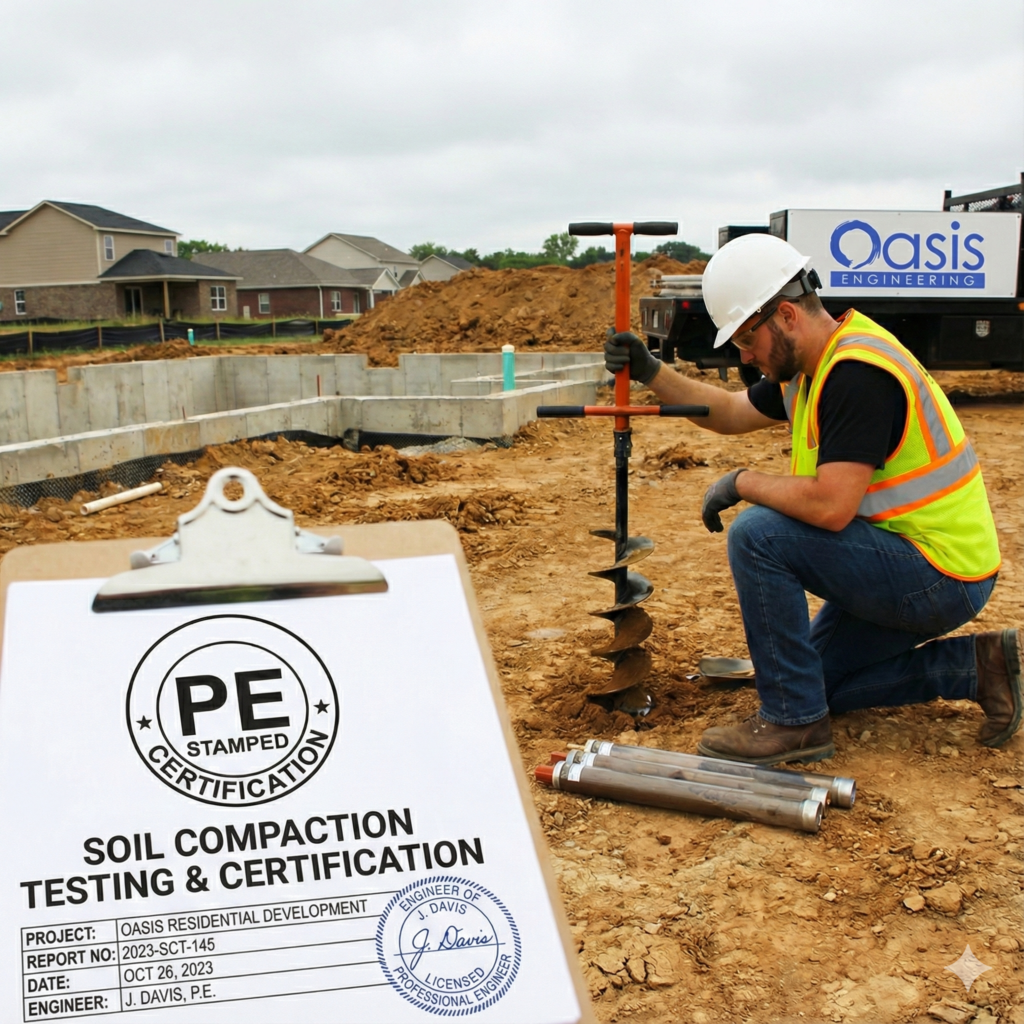
Oasis Engineering provides professional soil compaction testing across Florida.
Each project includes field density testing (ASTM D1556), lab verification (ASTM D698), and a PE-stamped report ready for permitting.
🧾 Compaction Testing Options
Note: All testing follows ASTM D1556 (Sand Cone Method) and ASTM D698 (Standard Proctor) standards. Each compaction certification is issued by a licensed Professional Engineer and includes verified field and laboratory data. Test points are selected based on site access and soil uniformity. Turnaround times may vary depending on lab processing and weather conditions. ⚠️ NOTE: The Pre-Pour Service ($450) is ONLY for clients who already possess a valid Laboratory Proctor Report for their soil. If you do not have a lab report, you must order the Standard Package.
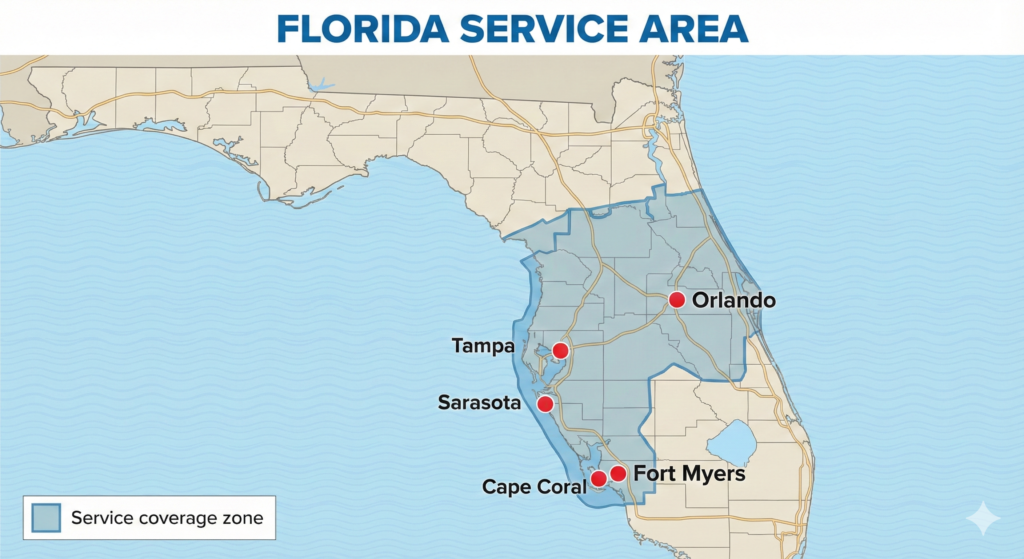
We currently offer easy online ordering for soil compaction testing and PE certification in all the areas shown above. You can place your order directly through our secure form at oasisengineering.com/soilserviceorder.
For custom engineering projects or services outside these regions, please contact us here and we’ll be happy to provide a tailored proposal.
🔍 About Soil Compaction Testing
Soil compaction testing is a field and laboratory procedure used to determine whether engineered fill or subgrade soils have been compacted to the specified density required for structural support. Proper compaction reduces settlement, prevents cracking, and ensures that the soil will safely support the intended structure or pavement.
Field density measurements are performed in accordance with ASTM D1556 – Sand Cone Method. In this method, a known volume of calibrated sand is used to determine the volume of a test hole excavated in the compacted soil. The mass of the extracted soil sample is weighed and its moisture content determined per ASTM D2216. These values are used to calculate the in-place wet density, dry density, and moisture content of the compacted layer.
The field results are compared to the maximum dry density and optimum moisture content established by a laboratory Standard or Modified Proctor test (ASTM D698 / ASTM D1557). This comparison determines the percent compaction achieved, expressed as a percentage of the laboratory maximum dry density.
Most building departments and geotechnical specifications require a minimum of 95% of the Standard Proctor Maximum Dry Density (ASTM D698) for structural fills and foundations, or 98% of the Modified Proctor (ASTM D1557) for pavement subgrades. Meeting or exceeding this standard indicates that the soil is adequately compacted for construction.
The final Compaction Certification Report issued by Oasis Engineering LLC summarizes the field test results, the corresponding laboratory Proctor data, and the achieved percent compaction. The report is reviewed, signed, and sealed by a licensed Professional Engineer for use in permitting and inspection documentation.
Disclaimer: Testing and reporting are performed in accordance with ASTM standards and based on the conditions observed at the time of testing. Results apply only to the specific test locations and do not represent continuous site monitoring or geotechnical design recommendations. Any deviations or changes in soil conditions after testing may require additional evaluation.
