 Skip to content
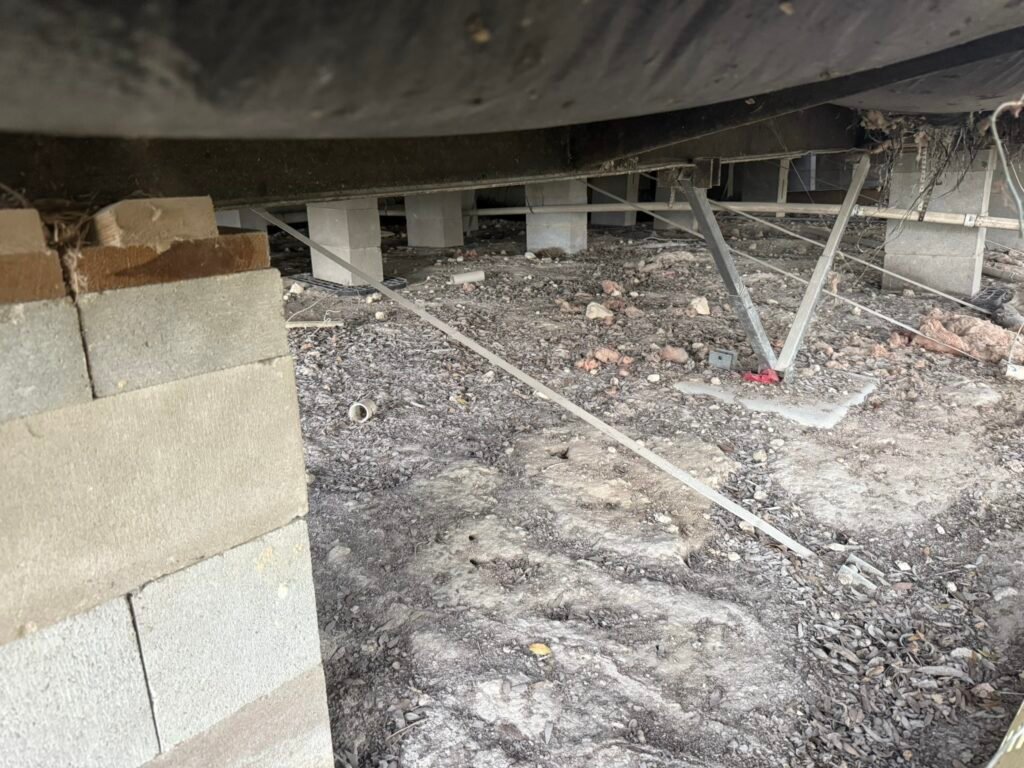
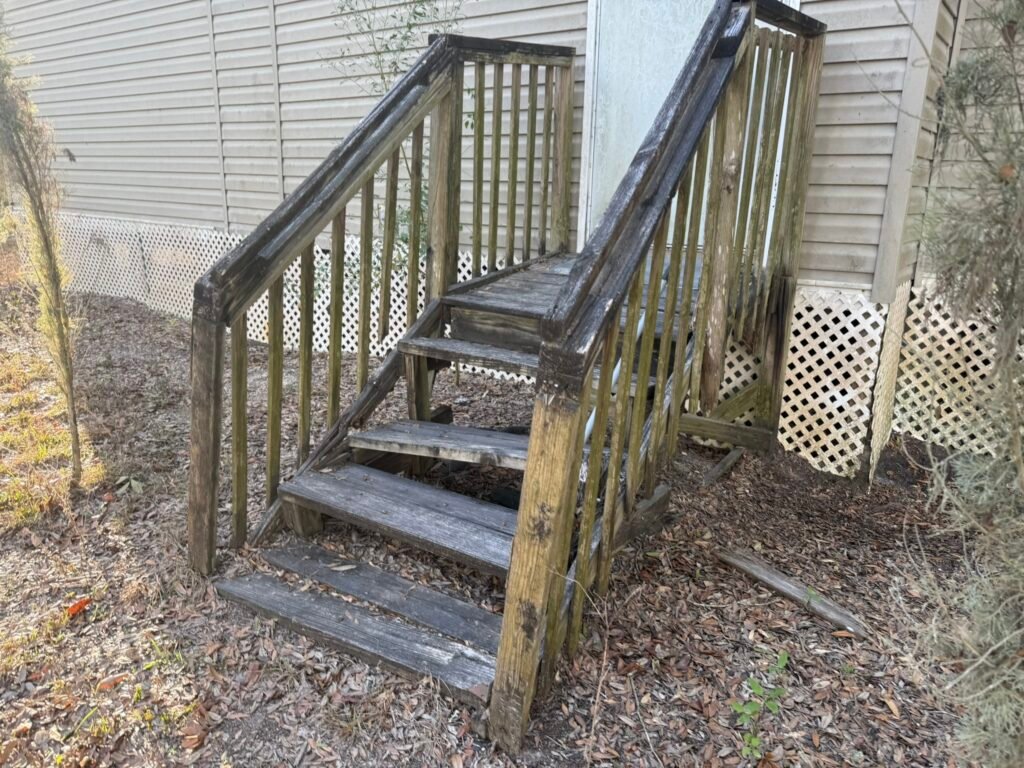
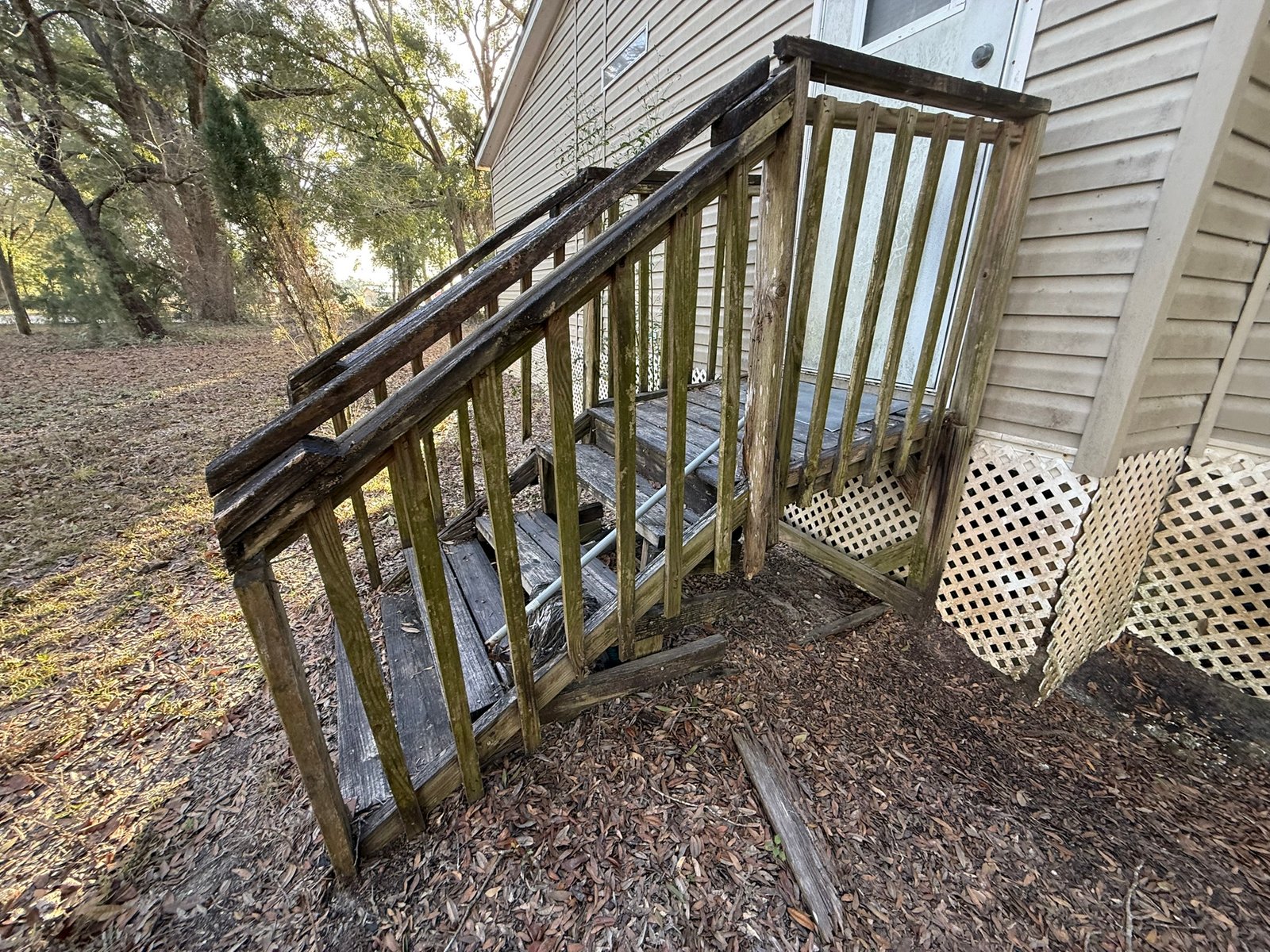
During a recent inspection on a manufactured home, I took the opportunity to document two very common conditions I see during foundation certifications:
- A properly performing block-and-pier foundation, and
- An aging exterior stairway that was visibly deteriorated and unsafe
This situation comes up all the time—especially with homes that are 10–30+ years old.
The big question homeowners ask is:
“If my deck or stairs are old or not built to today’s code, will that ruin my loan or foundation letter?”
The Short Answer
Not automatically.
But it depends on how the structure relates to the manufactured home and how it’s addressed.
What a Manufactured Home Foundation Letter Actually Covers
A manufactured home foundation letter (HUD Permanent Foundation Certification) is focused on one thing:
👉 Whether the manufactured home itself is properly supported, anchored, and performing as a permanent foundation system per HUD requirements.
This includes:
- Piers, footings, and load paths
- Anchorage and stability
- Soil bearing and drainage (visual)
- Whether the foundation meets HUD’s intent for permanence
It does not automatically certify:
- Decks
- Stairs
- Porches
- Carports
- Accessory structures
Those items are considered on-site structures, not part of the HUD foundation system.
The purpose of the foundation letter is not to certify every structure on the property. The manufactured home’s primary structural support and permanent foundation system are not negatively affected by accessory structures such as decks, stairs, or porches.
So What Happens If the Deck or Stairs Are in Poor Condition?
Here’s how lenders typically view it:
Case 1: Deck/Stairs Are Independent
If the deck or stairs:
- Are self-supporting
- Do not impose load on the manufactured home
- Do not interfere with the foundation system
Then:
- They do not invalidate the foundation letter
- The foundation certification can still be issued
- The condition is typically noted as an observation, not a failure
This is very common for secondary exits, rear stairs, or older add-ons.
Case 2: Deck/Stairs Are Structurally Attached
If the deck or stairs:
- Are attached to the home
- Rely on the home for vertical or lateral support
- Are pulling, sagging, or transferring load
Then:
- They may need repair, separation, or engineering clarification
- Lenders may request corrective action before closing
- The issue is not HUD compliance—it’s risk management
Will This Kill a Refinance or Purchase Loan?
Usually, no—but it can delay it if handled poorly.
Problems arise when:
- Reports over-promise code compliance
- Inspectors certify items outside their scope
- Access structures are incorrectly lumped into the foundation system
A properly written engineering letter:
- Clearly separates the foundation system from accessory structures
- Limits conclusions to visible, accessible conditions
- Avoids certifying permits, concealed connections, or code compliance unless explicitly requested
This approach protects:
- The homeowner
- The lender
- The engineer
How I Handle This in My Foundation Letters
When I encounter aging or sub-standard stairs or decks, I typically:
- Note their general condition
- Clarify they are independent of the manufactured home foundation
- State whether they adversely affect the home’s structural performance (often they do not)
- Avoid certifying code compliance unless separately engaged to do so
This keeps the letter:
- Accurate
- Defensible
- Lender-friendly
And most importantly—it keeps loans moving. Any visible safety-related conditions observed during the site visit are communicated to the owner for maintenance or repair consideration and are documented separately from the manufactured home foundation certification scope.
Bottom Line for Homeowners
- Old stairs ≠ automatic loan denial
- Old decks ≠ failed foundation
- What matters is load transfer and structural dependency
If you’re refinancing, selling, or purchasing a manufactured home and the lender is asking for a foundation letter, the goal is clarity—not perfection.
Need a Manufactured Home Foundation Letter?
We provide HUD-compliant manufactured home foundation letters nationwide, written specifically for mortgage, refinance, and underwriting use.
The purpose of this evaluation is to determine whether the manufactured home’s primary foundation and anchorage system is structurally adequate and whether the presence or condition of accessory structures adversely affects the performance of the manufactured home foundation system.
👉 Learn more or request a letter here:
https://oasisengineering.com/manufactured-home-foundation-letter/

More interesting info…