...

container home engineering

The fire-rating problem in container construction has already been solved.

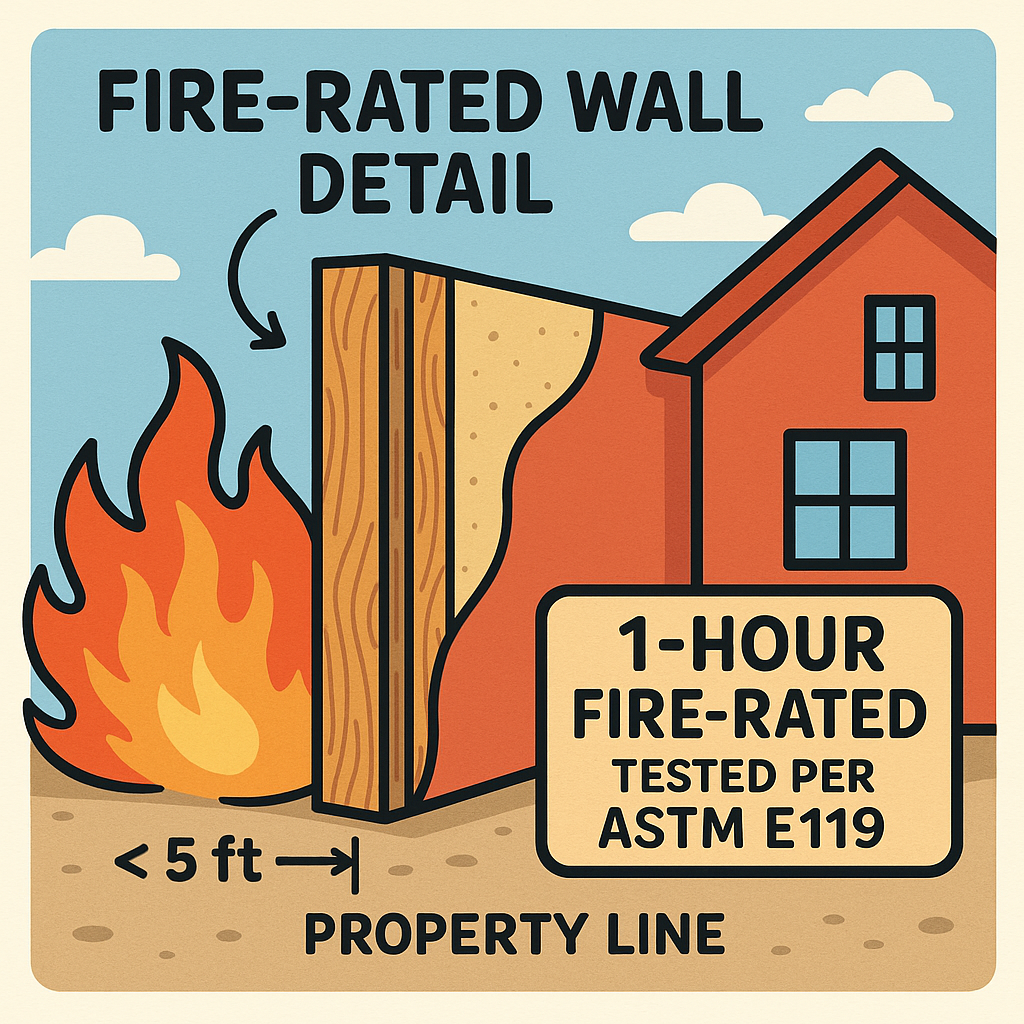
Fire-Rated Walls for Shipping Containers — Oasis Engineering Engineering Note · Fire Resistance The fire-rating problem in container construction has already been solved. For years, container projects have stalled at plan review on a single question. The answer was sitting in a UL design number the whole time. Here is the framework, the assemblies, and the code basis — published openly. Enrique Lairet, PE · Oasis Engineering April 2026 10 min read Walk into any plan review for a shipping-container building and you’ll hear the same conversation: what is the fire-resistance rating of the wall? The folklore says no UL-listed assembly works for containers. The folklore is wrong. The conversation usually ends one of three ways. The architect submits an alternative-means letter built from first principles — slow, expensive, AHJ-dependent, often rejected. The team strips out the container’s fire-rated function entirely and adds a separate stick-framed wall — wasteful, ugly, and defeats the point of building with containers. Or the project quietly dies. None of that is necessary. UL Design V497 — a one-sided steel-stud partition tested under ASTM E119 — is a direct fit for container construction under IBC §703.2.2(1). No alternative-means submittal required. No engineering-comparison gymnastics. The same design number covers 1-hour and 2-hour ratings. Why this works (the one-page version) Most fire-tested wall assemblies are symmetric — gypsum board on both sides of a stud cavity. When the industry tried to fit those onto containers, the question always came back: do we need to add gypsum to the exterior of the container too? That question has no clean answer, and it’s the wrong question. UL Design V497 is asymmetric. The test specimen has multiple layers of Type X gypsum on one side of a 3-5/8″ steel stud, and nothing on the other side — bare studs facing the furnace. The assembly achieves its rating with one protected face. That’s what was tested. That’s what’s listed. When V497 is applied to the interior face of a container, the corrugated steel container skin replaces what was bare studs in the test. The skin is unambiguously more protective than nothing. The rating holds. The whole industry has been looking for a symmetric tested assembly when an asymmetric one was sufficient. That’s the entire idea. Everything else in this article is execution. The code basis Here’s the relevant section of the IBC, verbatim: IBC §703.2.2 — Analytical MethodsThe fire resistance of building elements, components or assemblies established by an analytical method shall be by any of the methods listed in this section… (1) Fire-resistance designs documented in approved sources. … (4) Engineering analysis based on a comparison of building element, component or assemblies designs having fire-resistance ratings as determined by the test procedures set forth in ASTM E119 or UL 263. UL Design V497 is documented in the UL Product iQ database — an approved source under §703.2.2(1). Direct application. No engineering analysis needed. The 2-layer (1HR), 3-layer (1HR), and 4-layer (2HR) variants are all cataloged under the same V497 design number, and the gypsum manufacturer (National Gypsum) publishes the assembly under GA File WP 1297. The five assemblies We’ve published five canonical assemblies — three direct §703.2.2(1) applications of V497, and two §703.2.2(4) variants that add a UL-listed intumescent coating on the container exterior to give symmetric (both-sides) rated protection. Pick the one that matches your project’s rating requirement and direction. Assembly Rating Direction Code Basis Construction CFW-1A 1 HR Interior §703.2.2(1) 2 layers 5/8″ Type X + ProForm Quick-Set, 3-5/8″ steel studs @ 24″ o.c. CFW-1B 1 HR Interior §703.2.2(1) 3 layers 5/8″ Type X, 3-5/8″ steel studs @ 24″ o.c. CFW-2 2 HR Interior §703.2.2(1) 4 layers 5/8″ Type X, 3-5/8″ steel studs @ 24″ o.c. CFW-1E 1 HR Both sides §703.2.2(4) CFW-1B + UL-listed 1HR intumescent coating on container exterior CFW-2E 2 HR Both sides §703.2.2(4) CFW-2 + UL-listed 2HR intumescent coating on container exterior For typical V-B / R-3 / B occupancies — single-family, ADUs, small commercial, food service — CFW-1A or CFW-1B is what you want. For occupancy separations or 2HR fire walls, use CFW-2. For symmetric ratings (fire on either side), CFW-1E or CFW-2E. What about insulation? The most common follow-up question. Containers are tin cans — they need closed-cell spray polyurethane foam (ccSPF) for thermal performance and air-sealing. Does that break the V497 listing? It does not. Cavity insulation in V497 is optional per the listing. You have two clean options: leave the V497 stud cavity empty (or fill with glass-fiber batt, which is also covered), and apply ccSPF outboard of the studs — directly against the interior face of the container skin. The foam lives in the gap between the container skin and the back of the steel studs. The V497 assembly proper stays exactly as listed. Using this on a real project Read the white paper — especially the Limits and Permit Submittal sections. Pick the assembly that matches your project’s rating requirement and direction. Drop the CFW Detail Sheet into your architectural set, referenced from the wall type schedule. Get a project-specific PE-stamped letter from a PE licensed in the jurisdiction (we issue these directly, or through engineerletters.co for fast-turnaround scopes). Pre-coordinate with the AHJ before submittal. Most reviewers, once shown the V497 listing and the §703.2.2(1) citation, accept the framework on first pass. The hard part — the analysis and the published documentation — is now done. Need a PE letter for your project? Oasis Engineering provides project-specific PE letters and stamping based on these assemblies. We work with container builders, architects, and owners across multiple jurisdictions. Start a project View on GitHub Open-source by design Everything in this article — the white paper, the five assemblies, the detail sheet PDF, the code references, the equivalency analysis — lives in a public GitHub repository under an MIT license. Use it. Adapt it. Reference it in your permit set. If you find an error in the analysis or the citations, open an issue. If a manufacturer would like to

The fire-rating problem in container construction has already been solved. Read More »

Pull official NOAA weather data for any U.S. address on any storm date.

Pull Official NOAA Weather Data for Any Address and Storm Date — StormProof™ Address-Specific Weather Verification Pull official NOAA weather data for any U.S. address on any storm date. StormProof™ packages the same weather-station lookup engineers and researchers already do by hand — NOAA ASOS wind and gust records, NWS watch/warning archives, and NOAA Storm Events Database records — into a cited PDF anyone can generate in minutes. Get Your StormProof™ Report → Documentation kits Data sourced from: NOAA NWS Storm Events DB NEXRAD NEAREST STATION · 2.4mi KSARC · 8.1mi KVRB · 14mi KSRQ · 5.8mi Peak Gust · Property 112 mph Confidence HIGH What StormProof™ Does Turn a street address and a date into a cited weather record. When documenting what happened at a property during a storm, the underlying question is always the same: what were the actual weather conditions at that address? The data to answer it already exists — it lives in NOAA‘s Automated Surface Observing System (ASOS), the National Weather Service‘s warning archives, and the Storm Events Database — but pulling it manually for a specific property is a multi-hour research task. StormProof™ automates that lookup. Enter an address and a storm date; the tool identifies the nearest weather stations, pulls sustained-wind and gust records, rainfall totals, barometric pressure, and active NWS warnings, then packages the result as a cited PDF with a confidence score based on station proximity and cross-station agreement. It’s the same lookup a consulting engineer or meteorologist would assemble — productized so you can run it yourself in minutes. Every figure in the report includes a source citation: station ID, timestamp, and variable name, all traceable back to the underlying NOAA record. No proprietary scoring, no black-box algorithms — just organized, cited public data. How It Works Three inputs. One PDF. The full workflow runs behind a single form. 01 Address & Date Enter the property address and storm date. The geocoder locates the five nearest official NOAA stations and the relevant NWS Weather Forecast Office zone. 02 Multi-Station Pull Wind sustained + gust, rainfall, pressure, NWS watches/warnings, and Storm Events DB records are retrieved for the event window. Stations are cross-referenced for agreement. 03 Cited PDF Distance-weighted peak conditions, a HIGH/MEDIUM/LOW confidence score, NEXRAD radar context, and a narrative summary — all with full source citations. Sample Output What the report looks like. Every data point cites an official NOAA or NWS source. No proprietary data, no black-box scoring. If you want to independently verify a figure, the citation shows exactly where it came from. Peak wind & gust Distance-weighted to the address across nearest stations. Confidence scoring HIGH / MEDIUM / LOW based on station proximity and agreement. NWS warnings Active watches and warnings for the storm date. Radar context NEXRAD reflectivity imagery during the event window. StormProof™ Weather Verification Property · 1423 Harborview Ln Report #SP-24-0819Aug 19, 2024 Event: Hurricane Debby landfall · Aug 5, 2024 Stations analyzed: KSRQ (5.8mi), KVRB (14mi), KSARC (8.1mi) NWS warnings: Hurricane Warning in effect 03:12–18:40 EDT Peak Sustained 94 mph Peak Gust 112 mph Rainfall (24h) 8.4 in Min Pressure 978 mb HIGH CONFIDENCE — 3 stations within 15 miles “Wind conditions at the subject property on 08/05/2024 are consistent with Category-2 hurricane-force winds, with peak gusts of 112 mph recorded at KSRQ (5.8 mi NW)…” Source: NOAA ASOS · Station KSRQ · 2024-08-05T14:43Z · Variable ‘PK_WND_GUST’ Pricing Start free. Upgrade when you need the full report. One-time pricing. No subscriptions. Pre-Storm Baseline Report Free Guided 6-section walkthrough Attic documentation module Condition notes per area Timestamped PDF report Data stays on your device Start Free Baseline → Post-Storm Damage Documentation Kit $10 one-time Step-by-step walkthrough Per-area damage ratings Flood & water module Photo organization tools PDF paired with baseline Get the Kit → Weather + Everything StormProof™ Complete $29 one-time Full weather verification report Multi-station analysis + confidence NWS warnings + storm events Radar context + narrative Documentation kit included 48-page companion guide Get StormProof™ — $29 → Preview your weather report free before you pay · No credit card required Questions Common questions about StormProof™. Where does the data come from? Exclusively from official government sources: NOAA‘s ASOS/AWOS station network, NWS watch/warning archives, the NOAA Storm Events Database, and NEXRAD radar. Every data point in the report is cited to its source. What if the nearest station is far from my property? The report states each station’s distance explicitly and adjusts the confidence score. A property 2 miles from a station typically scores HIGH; one 18 miles out may score MEDIUM or LOW. You get transparency, not false precision. How is this different from free weather websites? Free sites typically give you current conditions for a named city. StormProof™ runs a multi-station, distance-weighted analysis for your exact address on a specific historical date, cites every data point, and produces a formatted PDF. How far back does the data go? ASOS station records go back decades; the NOAA Storm Events Database goes back to 1950. Practically, any storm from the last 20+ years is well-covered. How long does the full report take? The free preview is instant. The full StormProof™ Complete report (deeper multi-source investigation) typically renders within minutes and is delivered as a PDF. Related Tools Other resources from our toolkit. windcalculations.com Free wind load calculators and ASCE 7 design wind speed lookups for any U.S. location. floridawindcalcs.com Florida-specific wind calculators including HVHZ (High-Velocity Hurricane Zone) design speeds. hurricaneinspections.com Free pre-storm baseline kit, damage documentation tools, and StormProof™ weather verification. Get Started Official NOAA weather data at your address — in minutes. StormProof™ Complete — $29 one-time. Full weather verification report, documentation kit, and 48-page companion guide. Get StormProof™ — $29 → See all kits Free preview · No credit card required · Data from NOAA, NWS, and Storm Events DB

Pull official NOAA weather data for any U.S. address on any storm date. Read More »

Shipping container homes, engineered for real wind loads — not catalog assumptions.

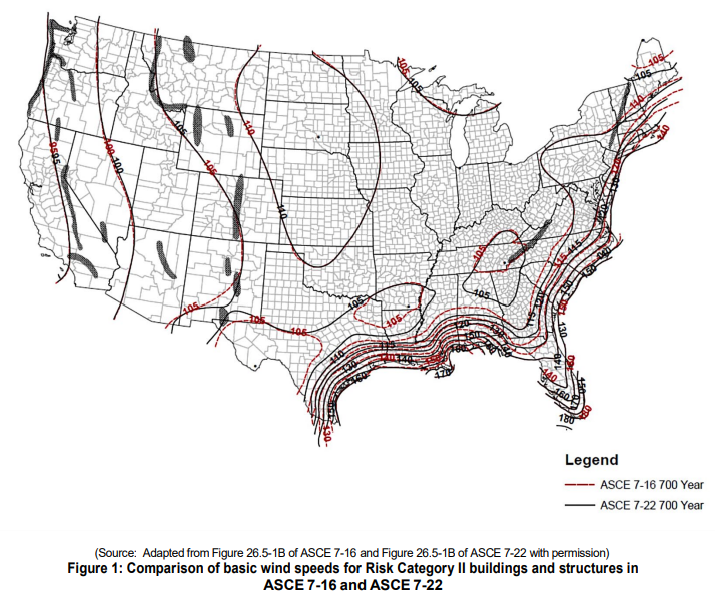
Shipping Container Homes in Hurricane Country — Wind Load, Engineering & Real Site Data | Oasis Engineering Container Home Engineering · Storm Country Shipping container homes, engineered for real wind loads — not catalog assumptions. A shipping container house has a structural advantage most builds don’t: a welded corten-steel frame with load-bearing corner castings rated for stacking nine containers high. But that advantage disappears the moment the foundation, anchoring, or cladding is designed to the wrong wind speed. This page walks through how to engineer a container home for coastal exposure — and how to pull the actual NOAA wind history for your exact site before drawings are stamped. Pull Site Wind Data → StormProof™ → Documentation kits References: ASCE 7 NOAA NWS ASOS ISO 1496 Site · Peak Gust (10y) 148 mph ASCE 7 Vult 160 mph Exposure D · coastal Why Container Homes The structural case for a shipping container house. A standard ISO 1496 intermodal container is a fully-welded steel monocoque. The corner castings at each of its eight vertices are rated to transfer the entire stacked weight of eight more loaded containers above them — roughly 192,000 kg of vertical capacity per corner. The corrugated side walls are structural. The floor sits on a frame of 4-inch steel cross-members. It arrives already engineered; the question for a container home is what happens after you start cutting it. Every opening you cut — a door, a window, a section removed to join two containers side-by-side — removes load path. In a coastal or hurricane-zone build, that matters. Wind doesn’t just push a structure sideways; it creates uplift, pulling the roof and walls outward as low-pressure vortices form along corners and eaves. A weathering steel box designed to be stacked is not automatically a box designed to resist being lifted. That is a design problem — and the inputs to that problem start with your site-specific wind speed. This guide covers how to think about wind load, foundation anchoring, exposure category, cladding, and verification for shipping container homes built in regions where hurricanes and severe thunderstorms are a design concern — the Florida Gulf and Atlantic coasts, coastal Texas, the Carolinas, coastal Georgia, and the hurricane-active areas of the northeast. Container · 20ft 160 sqft 20′ × 8′ × 8’6″ · ~2,300 kg tare Container · 40ft HC 320 sqft 40′ × 8′ × 9’6″ · ~3,900 kg tare Corner casting 86,400 kg Rated vertical load per corner (ISO 1161) Steel gauge 14 ga · corten Corrugated side walls are structural The Wind-Load Problem ASCE 7 tells you the code speed. It doesn’t tell you what actually hit your lot. Two different questions. Both matter. Container home design in a hurricane zone typically starts with ASCE 7 — the American Society of Civil Engineers standard that sets minimum wind loads for buildings. It gives you Vult, the ultimate design wind speed, as a function of geographic location, building risk category, and exposure category. For a Risk Category II residence in Miami-Dade, that number is north of 170 mph; in coastal North Carolina, ~150 mph; inland Florida, ~130–140 mph. Exposure D (coastal, open water) loads design pressures higher than Exposure C (open terrain) by roughly 20–30%. Those numbers set the floor for how the container home must be anchored, how its penetrations must be reinforced, how its cladding and windows must be rated. But ASCE 7 is a code-minimum input — it tells you what to design for, not what actually happened at your address during the last storm. Those are two different engineering questions. “The structural steel of a shipping container is rated for the North Atlantic. The weakness in a container home build is almost never the box itself — it’s the foundation connection, the field-cut openings, and the cladding.” — Common finding across container home site reviews For pre-build design, you want the ASCE 7 code speed for your site, plus a sanity-check against the actual peak gusts that have been recorded near your property in the NOAA Storm Events Database. If the nearest ASOS station recorded a 148 mph gust in 2018, and your code minimum is 130 mph, that is a meaningful data point for the designer and the owner. It doesn’t override the code — it informs the margin. For post-storm documentation — insurance claim, permit reinspection, structural review — you need the opposite: the recorded conditions at your address on a specific date. That’s the piece that’s hardest to assemble by hand, and the piece StormProof™ is built for. Design Wind Speeds · Common Build Regions Approximate ASCE 7-22 Risk Category II Vult. Code speeds for common container-home build regions. Confirm final values against current ASCE 7 and your local AHJ. Region Exposure Notes Vult · mph Miami-Dade / Broward, FL HVHZ · Florida Building Code special chapter · Exposure C/D 170–180 SW Florida coast Gulf coast · Exposure D on waterfront · Ian 2022 reference 160 FL Panhandle / Big Bend Exposure C inland · Michael 2018, Idalia 2023, Helene 2024 history 145–155 Coastal TX (Galveston / Corpus) Windstorm Inspection Program · TDI WPI-8 required 150–160 Outer Banks / Coastal NC Exposure D on dunes · Floyd, Florence, Dorian history 140–150 Inland Florida Exposure B/C · still hurricane zone · Charley 2004 crossed at Cat-4 130–140 Coastal GA / SC Exposure C/D · Matthew 2016, Helene 2024 inland tracks 140–150 Gulf LA / MS / AL Ida 2021, Katrina 2005, Michael 2018 reference 150–160 Engineering Essentials What actually has to be right on a shipping container home. Eight considerations that every storm-country container build has to solve for. Foundation & anchoring Concrete pier, helical pile, or monolithic slab — tied to the four corner castings with engineered anchor bolts sized to the uplift load, not guesswork. This is the single most common point of failure. Opening reinforcement Every door, window, and side-cut removes structural wall. Requires welded steel header/sill reinforcement sized to restore the original load path. Don’t skip this

Shipping container homes, engineered for real wind loads — not catalog assumptions. Read More »

Electrical Grounding & Bonding for Shipping Container Homes: What Your Electrician Might Not Know

Electrical Grounding & Bonding for Shipping Container Homes — What Engineers and Electricians Need to Know Container Home Engineering Electrical Grounding & Bonding for Shipping Container Homes: What Your Electrician Might Not Know Standard residential electrical notes don’t account for living inside a conductive steel box. Here’s what engineers, electricians, and GCs need to specify — and why it matters. By Oasis Engineering Published April 2026 NEC 250 • FBC 2023 The Problem Nobody Talks About Shipping container homes are, structurally, steel boxes. That’s what makes them strong, modular, and efficient to build with. But from an electrical safety standpoint, it also means your client is living inside a giant conductor. In conventional wood-frame residential construction, if a hot wire comes loose and contacts a wall stud, the wood doesn’t conduct. The fault may go unnoticed, but it’s unlikely to electrocute someone touching the wall from the outside. In a container home, that same loose wire energizes the entire building envelope. Walls, ceiling, floor framing — all of it becomes a shock hazard. Most residential electrical plans use boilerplate general notes that reference NEC 250, call out Ufer grounding for rebar in footings, and specify code-sized equipment grounding conductors. These notes are perfectly adequate for stick-built houses. They are not sufficient for shipping container structures without additional container-specific bonding requirements. The Failure Scenario A hot conductor contacts the container shell through a misdriven screw, abraded Romex, or a faulty appliance connection. The container becomes energized. A person standing on wet ground touches the container. The fault current flows through their body to earth. If the container shell is not bonded to the electrical system’s equipment grounding conductor, the only fault path is through earth via a grounding rod — which typically has 25+ ohms of resistance. That’s nowhere near enough to trip a standard breaker quickly. The container stays “hot” until someone gets hurt or the wire burns through. Grounding vs. Bonding — The Critical Distinction These terms are often used interchangeably, even by electricians. For container homes, the distinction is life-or-death: Grounding connects the electrical system to earth — typically through ground rods, Ufer electrodes (rebar in concrete), or water pipes. Its primary purpose is voltage stabilization and lightning dissipation. Ground rods do not provide a reliable fault-clearing path because soil resistance is too high to generate the current needed to trip a breaker. Bonding connects all conductive surfaces (like a container shell) to the electrical system’s equipment grounding conductor (EGC), creating a low-impedance fault path back to the panel. When a hot wire contacts a bonded container shell, the result is essentially a dead short — hundreds of amps flowing through the EGC back to the panel, tripping the breaker in milliseconds. The Key Takeaway Grounding rods protect equipment from voltage spikes. Bonding protects people from electrocution. In a container home, you need both — but bonding is what saves lives in a fault event. What the NEC Actually Requires The National Electrical Code doesn’t have a “shipping container” section (yet). But the requirements are there — they just need to be applied correctly: NEC 250.4(A)(2) — Effective Ground-Fault Current Path Requires that electrical equipment and wiring be connected to the supply source via a low-impedance path capable of carrying enough fault current to trip the overcurrent device. In a container, the “electrical equipment” includes the steel shell itself, since it’s in proximity to all wiring and could become energized. NEC 250.50 — Grounding Electrode System Requires all grounding electrodes present at a building to be bonded together into one system. If your container has a concrete-encased electrode (Ufer), ground rods, and a structural steel frame, they all must be interconnected. NEC 250.52(A)(2) — Metal Frame of the Building The metal frame of a building can serve as a grounding electrode when it’s effectively grounded. A shipping container’s steel frame, properly bonded, can qualify — but this doesn’t replace the EGC bonding requirement. It supplements it. NEC 250.104 — Bonding of Piping and Exposed Structural Metal Exposed structural metal that is likely to become energized must be bonded. A container shell is definitionally exposed structural metal. Practical Installation Requirements Here’s what should be specified on the electrical drawings for any container home project: Individual Unit Bonding Each container unit requires a bonding conductor — minimum #6 AWG copper — connected from the container’s steel frame to the equipment grounding bus in the electrical panel serving that unit. The connection point on the container should be a bolted lug on clean, bare steel (paint and corten removed at the contact area) with an anti-oxidant compound applied. Multi-Unit Interconnection In multi-container projects (like a 7-unit building), all containers must be bonded to each other to maintain electrical continuity across the structure. Where containers are welded together, the welds typically provide adequate continuity — but this should be verified with a low-resistance ohmmeter. Where containers are bolted or stacked with gaskets, a separate bonding jumper is required across each joint. GFCI Protection While NEC already requires GFCI in kitchens, bathrooms, garages, and outdoors, container homes warrant GFCI on all 15/20A branch circuits. A GFCI trips at 5 milliamps — well below the threshold for cardiac fibrillation — and provides protection regardless of the fault path impedance. This is your second line of defense if bonding is compromised. Wiring Method Considerations Romex (NM cable) run through steel framing creates abrasion risk that doesn’t exist in wood-frame construction. All penetrations through container steel should use insulated bushings or grommets. Many jurisdictions and inspectors will require conduit (EMT or MC cable at minimum) inside containers for this reason. Regardless of local requirements, specifying conduit or MC cable is best practice for container structures. Foundation Electrode Coordination Containers on conventional slab foundations with rebar can use the Ufer ground as one electrode in the system. Containers on pier foundations, screw piles, or steel frames may not have a concrete-encased electrode available, requiring driven ground rods (two minimum per NEC 250.53) plus the structural steel

Electrical Grounding & Bonding for Shipping Container Homes: What Your Electrician Might Not Know Read More »

DIY Container USA Materials

Material Substitution Guide for DIY Container Homes | Oasis

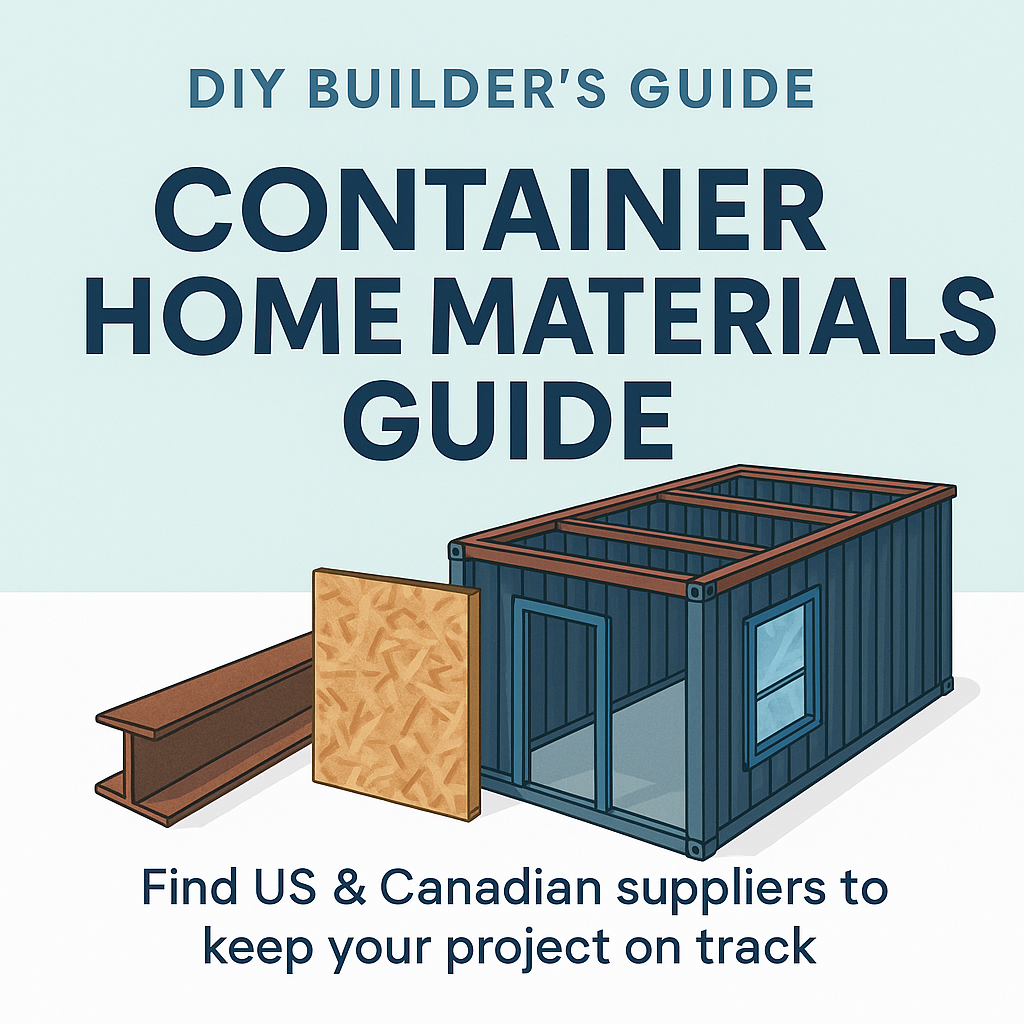
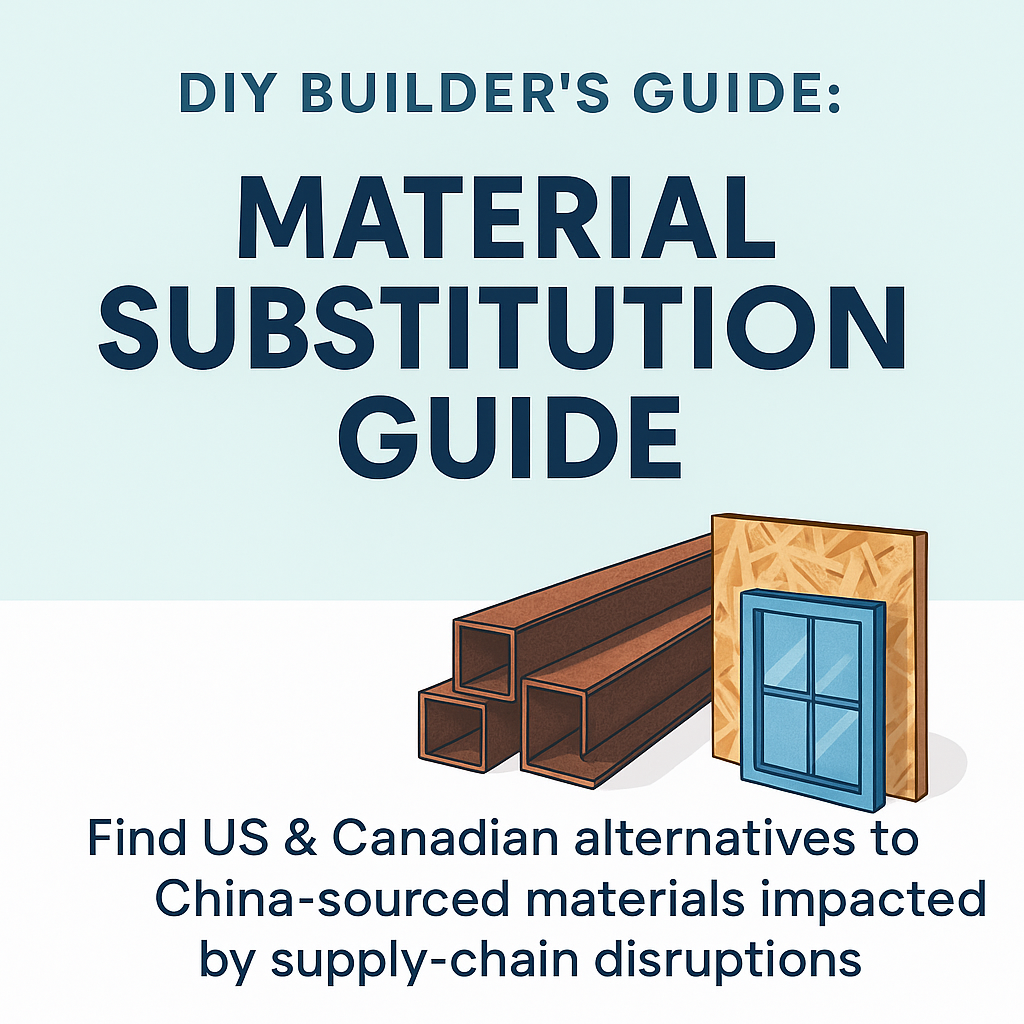
Container Home Material Substitution Guide: North American Alternatives Container Home Material Substitution Guide: Navigating Supply Chains with North American Alternatives Building a container home is an exciting venture! However, global supply chain disruptions, like a potential trade embargo on China, can throw a wrench in your plans if you’re relying on materials sourced from overseas. This guide is here to help you, the DIY builder or small contractor, find reliable North American alternatives for common container home building components. Keep your project on track with locally sourced, quality materials! Critical Building Components & North American Substitutes 1. Steel Corner Castings Typical Source: China North American Substitute: ASTM A148 compliant castings from U.S. foundries. Actionable Tips & Notes: Ensure the foundry can provide certification for the steel grade and quality. ASTM A148 covers high-strength structural steel. These are critical for stacking and connecting containers. Verify load-bearing capacity specifications with the supplier. Lead times can vary, so order well in advance. Cost Comparison: Generally higher than Chinese imports due to labor, material, and certification costs. Expect a 20-50% increase, but this ensures quality and compliance. Reputable Supplier Example: Castings For Industry (CFI) (Note: Pacific Steel Casting is no longer operational. CFI is an example of a US-based casting provider; always verify specific product availability for container corners or custom casting capabilities.) 2. Corten (Weathering) Steel Sheets Typical Source: China North American Substitute: ASTM A606 Type 4 or ASTM A588 from U.S. steel suppliers. Actionable Tips & Notes: Corten (or weathering steel) forms a stable rust-like appearance over time, protecting it from further corrosion. Specify the desired ASTM grade. Ideal for exterior cladding or structural elements where a rustic look and durability are desired. Surface preparation is key for achieving the desired patina. Consult supplier guidelines. Cost Comparison: U.S.-produced Corten is typically 15-40% more expensive than imported generic weathering steel. Prices fluctuate with the steel market. Reputable Supplier Example: Ryerson 3. Twist-Lock Fasteners Typical Source: China North American Substitute: USA-made marine-grade or specialized container hardware suppliers. Actionable Tips & Notes: Twist-locks are essential for securing containers to foundations or to each other. Ensure they meet required load ratings. Look for suppliers specializing in shipping container hardware or heavy-duty industrial fasteners. Consider galvanized or stainless steel options for better corrosion resistance, especially in coastal areas. Cost Comparison: Domestic, certified twist-locks can be 30-70% more expensive. This reflects higher quality materials and testing. Reputable Supplier Example: Tandemloc 4. Laminated Safety Glass Typical Source: China North American Substitute: Reputable North American glass manufacturers. Actionable Tips & Notes: Laminated glass is crucial for safety and security, as it holds together when shattered. Specify thickness, any required tints, or Low-E coatings for energy efficiency. Local glass shops can often custom-cut and temper glass from these major manufacturers. Get quotes from several local suppliers. Cost Comparison: Expect a 15-35% price increase for domestically produced laminated glass. Custom sizes and features will add to the cost. Reputable Supplier Example: Vitro Architectural Glass 5. HVHZ-Approved Windows/Doors Typical Source: China (often not meeting specific North American HVHZ standards) North American Substitute: Specialized manufacturers with HVHZ (High-Velocity Hurricane Zone) certifications. Actionable Tips & Notes: If your container home is in a hurricane-prone area (e.g., Florida, Gulf Coast), HVHZ-rated windows and doors are mandatory. Ensure products have current Florida Product Approval or approvals relevant to your specific local building codes. Installation is critical; use certified installers or follow manufacturer specifications meticulously. Cost Comparison: HVHZ-approved products are significantly more expensive (50-150%+) than standard, non-rated units, regardless of origin, due to stringent testing and robust construction. Sourcing domestic ensures compliance and easier warranty claims. Reputable Supplier Example: PGT Custom Windows & Doors 6. LED Lighting Components Typical Source: China (for individual diodes, drivers, and complete fixtures) North American Substitute: Companies that assemble or manufacture LED fixtures in the U.S. or Canada, often using globally sourced components but with local quality control and support. Actionable Tips & Notes: Look for certifications like UL (Underwriters Laboratories) or ETL (Intertek) for safety and performance. Consider “Assembled in USA” or “Made in USA” labels. Component origins can still be global, but final assembly and quality control in North America offer advantages. Focus on warranty and customer support, which are often better with domestic or North American-based companies. Cost Comparison: U.S./Canadian assembled or manufactured LED fixtures can be 20-60% more expensive. However, longer lifespan and better efficiency can offset initial costs. Reputable Supplier Example: Cree Lighting 7. Insulation Materials (Spray Foam, Rigid Board) Typical Source: China (for some raw materials or finished products) North American Substitute: Major insulation manufacturers with extensive production facilities in the U.S. and Canada. Actionable Tips & Notes: Spray Foam: Ensure installers are certified. Consider open-cell vs. closed-cell based on your climate and structural needs (closed-cell adds rigidity and has a higher R-value per inch). Rigid Board (XPS, EPS, Polyiso): Check R-value per inch and select appropriate thickness. Ensure compatibility with adhesives and facing materials. Local building material suppliers will carry products from these major manufacturers. Cost Comparison: Prices are generally competitive, but a potential embargo could shift pricing. North American brands are widely available and less susceptible to overseas shipping disruptions. Any difference is usually within 5-15% for standard products. Reputable Supplier Example (for a range of insulation): Owens Corning 8. Roofing Materials (Metal Roof Panels) Typical Source: China (for coil stock or finished panels) North American Substitute: Domestic roll-formers and metal roofing manufacturers. Actionable Tips & Notes: Choose the right panel profile (e.g., standing seam, corrugated) and gauge (thickness) for your climate and aesthetic. Consider paint finishes (e.g., Kynar 500) for longevity and color retention. Many suppliers offer custom-cut lengths, reducing waste. Cost Comparison: Domestic metal roofing is often 10-30% more expensive but offers better warranties, quality control, and easier access to matching trim and accessories. Reputable Supplier Example: McElroy Metal 9. Fasteners & Anchors (Self-tapping Screws, Structural Anchors) Typical Source: China North American Substitute: Well-known North American fastener brands with domestic manufacturing or strong quality control over global supply chains. Actionable Tips &

Material Substitution Guide for DIY Container Homes | Oasis Read More »

Understanding IBC Section 3115: Code Requirements for Shipping Container Homes
Understanding IBC Section 3115: Code Requirements for Shipping Container Homes Repurposing shipping containers into safe, code-compliant homes requires more than creativity—it demands structural expertise, a deep understanding of code, and precise engineering. At Oasis Engineering, we specialize in helping homeowners and developers navigate the critical provisions of the International Building Code (IBC), especially Section 3115. In this article, we’ll break down the real-world requirements of IBC Section 3115, especially as they apply to single-family residential projects, like a shipping container home. Whether you’re a homeowner, builder, or architect, here’s what you need to know to design, permit, and build it right. 🔍 What is Section 3115? Section 3115 of the IBC was created to fill a critical gap in the code: how to properly repurpose intermodal shipping containers for use as buildings or structures. These containers are strong and modular by design—but turning them into livable spaces requires careful attention to structural integrity, material verification, and safety features. 📋 Key Requirements for Residential Projects 1. General Applicability (3115.1) If you’re turning a shipping container into any part of a building—whether a standalone home or an ADU—you must comply with Section 3115 and related chapters of the IBC. This applies even to small single-unit homes. Local code officials will look to this section when evaluating plans. 2. Construction Documents (3115.2) You need engineering drawings that prove: Without proper documentation, your permit will likely be delayed or denied. At Oasis Engineering, we provide engineered plans and calculations tailored for IBC Section 3115, ready for submission. 3. Container Identification and Data Plate (3115.3) Each container must include its ISO 6346 data plate with: You’ll also need to verify this information via an approved agency. This data plate proves the container’s original structural rating—and yes, officials will ask for it. In some cases, you can remove the plate, but only with written approval from your building department. 4. Wood Floor Protection (3115.4) Many containers have treated plywood flooring, but you still must show protection against: This means sealing, replacing, or overlaying floors with proper materials per Section 2304.12.1.1. 5. Under-Floor Ventilation (3115.5) If your container is raised above ground (common in flood or slabless areas), you must ventilate the underfloor space according to Section 1202.4. This reduces moisture and prevents wood rot. 6. Roof Assemblies (3115.6) Container roofs must comply with Chapter 15 for weatherproofing, insulation, and slope. ✅ Exception: A single-unit, standalone container not connected or stacked doesn’t have to meet all conventional roof requirements. Still, engineered roofing is smart for durability and compliance. 7. Joints and Voids (3115.7) If your design includes cut-outs or stacking, you’ll need to fireproof voids at rated assemblies per Section 715. For single units, this is rarely triggered—but it’s critical if you combine containers. 🏗️ Structural Requirements for Container Homes 8. Structural Compliance (3115.8) Your container must meet: This includes wind, seismic, snow, and other environmental loads. 9. Foundations and Anchorage (3115.8.1 – 3115.8.1.1) Every container home must be anchored to a foundation designed per IBC Chapters 16–23. Whether it’s: …you need engineered calculations and a continuous load path from roof to earth. 10. Welding and Modifications (3115.8.2) All new welds or structural changes must match or exceed the strength of the original container. Oasis Tip: Reinforcing around door/window cutouts is not just best practice—it’s required. Never notch corner posts or remove roof framing without engineer sign-off. ✅ Simplified Design Path for Single-Unit Homes (3115.8.5) Good news: If your project is a standalone, single-unit container, you can use the simplified structural design method, which assumes: This approach cuts red tape but still requires precise documentation and logic behind any wall openings or reinforcements. Opening Rules: And yes—weld shut any doors that you’re using structurally, especially on end walls. 🧠 Why This All Matters Most shipping containers were designed for cargo—not hurricanes, earthquakes, or long-term habitation. Section 3115 exists to ensure that a structure that “looks strong” actually performs safely under code-defined loads. Whether you’re in Arizona, Florida, or Texas —every AHJ (Authority Having Jurisdiction) wants assurance that your container home isn’t just creative… it’s compliant. 🏡 Work with the Experts in Shipping Container Home Engineering At Oasis Engineering, we’ve reviewed, designed, and certified dozens of container-based projects across multiple states. We don’t just understand Section 3115—we use it daily to bring projects from concept to permit with clarity and confidence. ✅ Stamped Engineering Plans✅ IBC / IRC Code Compliance✅ Modular and Site-Built Approaches✅ Customized for Your Local Conditions 📞 Ready to Build Your Container Home? Contact us today to get started with a code-compliant structural plan for your container home—whether you’re DIY-ing, working with a GC, or just sketching your first dream.

Understanding IBC Section 3115: Code Requirements for Shipping Container Homes Read More »

The Benefits of Closed-Cell Foam Insulation for Container Homes: A Complete Guide

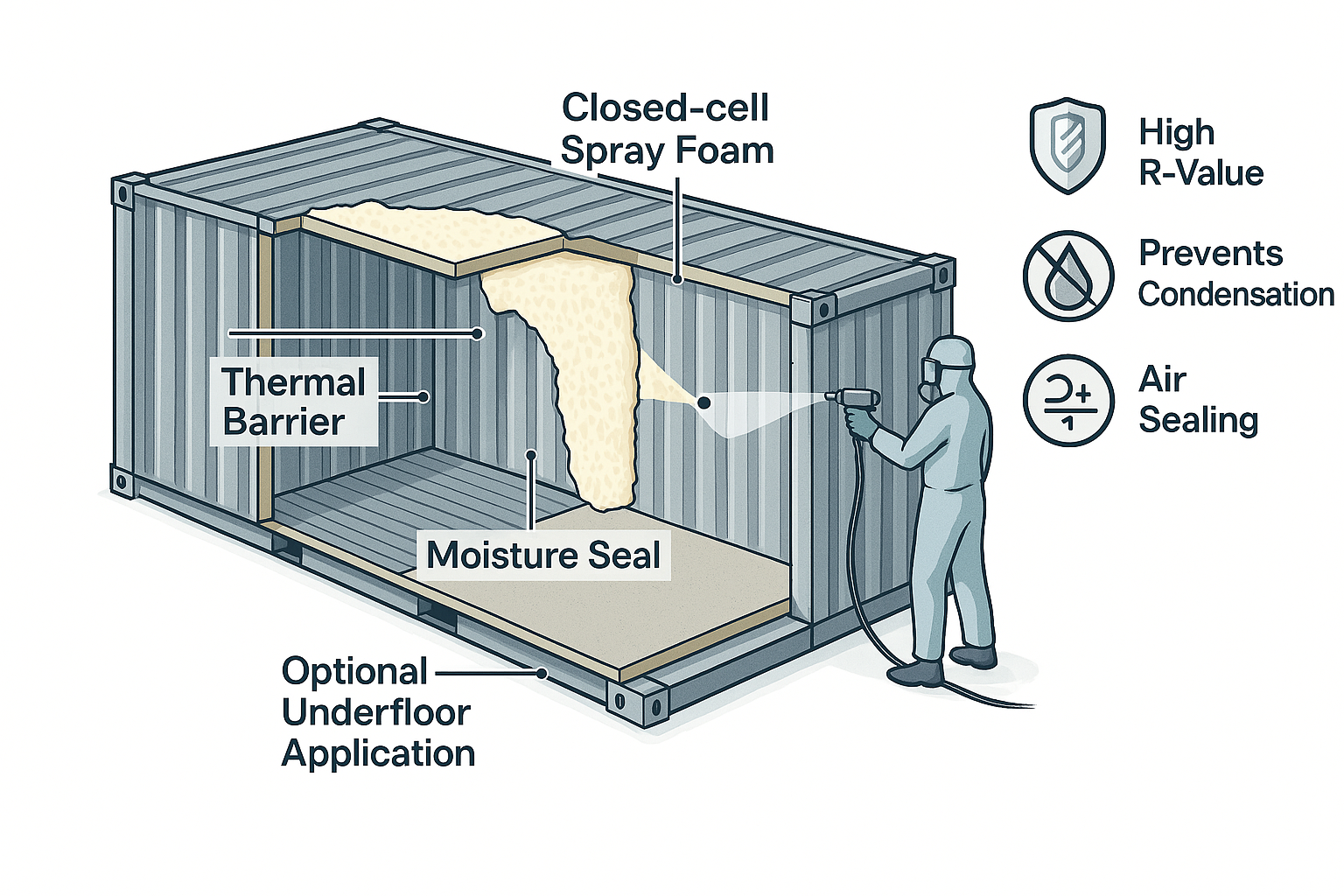
Are you considering insulating your container home but unsure where to start? Closed-cell foam insulation might be the perfect solution for your project. In this blog post, we’ll dive into the key benefits of closed-cell foam insulation, explain how to apply it, and clarify when and where to use a vapor barrier—specifically tailored for container homes. Plus, we’ll show you how to calculate your insulation needs with our free tool, the Insulation Planner. Let’s explore why this insulation type is a game-changer and how it can help you make informed decisions for your container home build. Benefits of Closed-Cell Foam Insulation Closed-cell foam insulation stands out as an exceptional choice for container homes due to its unique properties. Here’s why it’s worth considering: 1. High R-Value per Inch Closed-cell foam insulation boasts a higher R-value per inch than many other insulation materials. This means it delivers superior thermal resistance in a thinner layer—ideal for container homes where space is at a premium. With this high-efficiency insulation, you can keep your home comfortable year-round without sacrificing valuable interior space. 2. Built-In Vapor Barrier Unlike open-cell foam or fiberglass, closed-cell foam’s dense structure naturally blocks moisture, acting as its own vapor barrier. This eliminates the need for additional materials in most cases, simplifying your insulation process and protecting your container home from moisture-related issues like rust or mold. 3. Enhanced Structural Strength When sprayed onto your container’s walls, closed-cell foam hardens and bonds to the surface, adding rigidity and structural integrity. This is especially beneficial if you’ve cut out sections for windows or doors, as it reinforces the metal frame and helps maintain the container’s stability. 4. Water and Mold Resistance Closed-cell foam is impermeable to water and highly resistant to mold growth. For container homes, which are often exposed to the elements during construction or in humid climates, this feature ensures a healthier living environment and reduces the risk of long-term damage. 5. Long-Lasting Durability Once installed, closed-cell foam insulation is built to last. It doesn’t settle, sag, or degrade over time, making it a low-maintenance option that provides consistent performance for decades. This durability translates to fewer headaches and repair costs down the road. How to Apply Closed-Cell Foam Insulation Applying closed-cell foam insulation is a straightforward process, though it’s typically best left to professionals for optimal results. Here’s how it works: Professional installation is recommended for container homes not only for quality but also to maximize the insulation’s benefits, like its structural reinforcement and vapor barrier properties. When and Where to Use a Vapor Barrier in Container Homes One of the standout features of closed-cell foam insulation is its ability to double as a vapor barrier, thanks to its closed-cell structure that prevents moisture transmission. For most container homes, this built-in barrier is sufficient to protect against condensation and humidity—common concerns with metal structures. However, there are exceptions where an additional vapor barrier might be necessary: In most cases, though, closed-cell foam insulation eliminates the need for a separate vapor barrier, saving you time and money. If you’re unsure about your specific setup, consult a local contractor or building inspector for personalized advice. Calculate Your Insulation Needs with Our Tool Getting the right amount of insulation is crucial for energy efficiency, comfort, and cost management. Too little insulation leaves your container home vulnerable to temperature swings, while too much can unnecessarily drive up expenses. That’s where our Insulation Planner comes in. This free tool lets you input details about your container home—such as dimensions, climate zone, and desired R-value—to calculate exactly how much closed-cell foam insulation you’ll need. It’s an easy way to plan your project with confidence, ensuring you’re prepared before installation begins. Conclusion: Why Closed-Cell Foam Insulation is a Smart Choice Closed-cell foam insulation offers a powerful combination of benefits for container homes: top-tier insulation with a high R-value, a built-in vapor barrier, added structural strength, water and mold resistance, and long-term durability. By understanding how to apply it and when an additional vapor barrier might be needed, you can tailor this solution to your specific project. Ready to get started? Use our Insulation Planner to calculate your needs and take the first step toward a well-insulated, comfortable, and durable container home. With closed-cell foam insulation, you’re not just building a house—you’re creating a smart, sustainable living space that stands the test of time.

The Benefits of Closed-Cell Foam Insulation for Container Homes: A Complete Guide Read More »

Tokyo, Shibuya & Shinjuku Container Homes | Japanese Design Collection
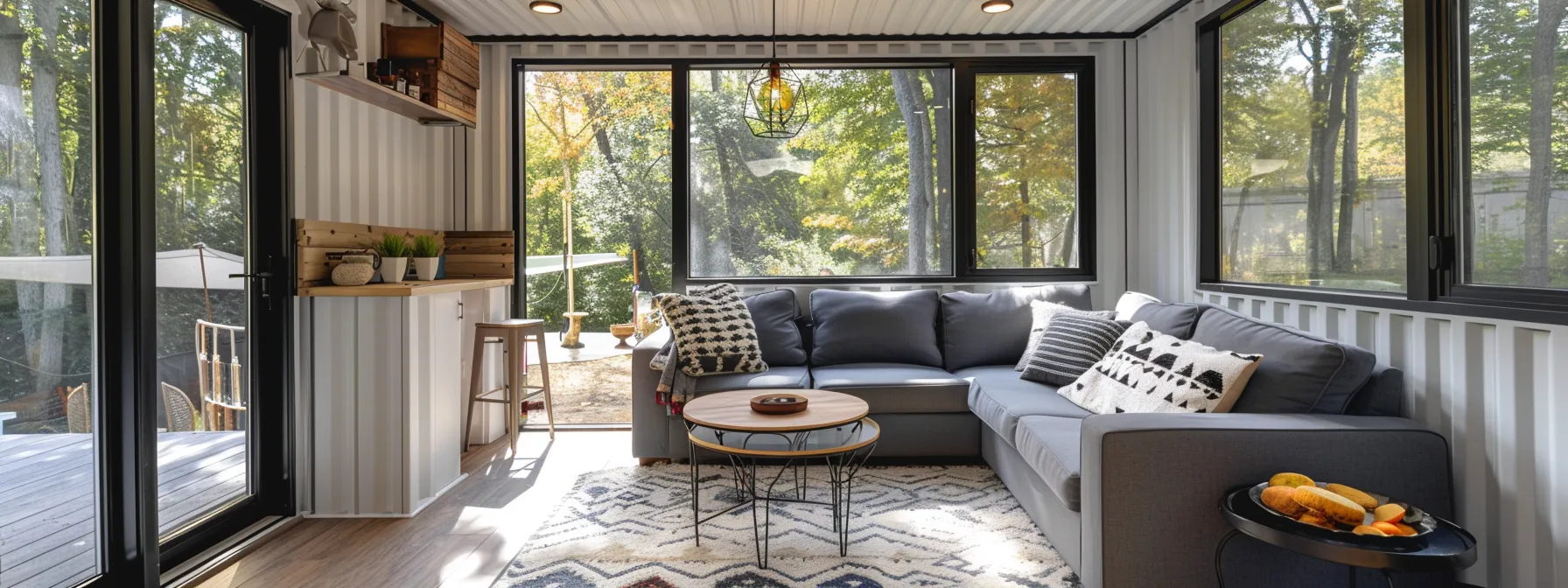
Introducing our Japanese Design Collection, featuring three meticulously crafted modular container home designs that blend modern minimalism with traditional Japanese aesthetics. Each design is optimized for narrow lots, making them ideal for urban settings, rentals, Airbnb ventures, or multifamily investments. Whether you love the design and want to build directly from it or simply use it as inspiration to remix and customize your dream home, these plans are ready for instant download to help you kickstart your container home journey. Tokyo: Sleek 3-Container Design The Tokyo model utilizes three 40-foot shipping containers to create a 960-square-foot living space. This design emphasizes simplicity and functionality, reflecting the essence of Japanese minimalist living. The layout includes an open-concept living and dining area, a well-appointed kitchen, two bedrooms, and two bathrooms. Large windows and sliding glass doors enhance natural light, fostering a seamless connection between indoor and outdoor spaces. This model is perfect for individuals or small families seeking a compact yet comfortable home. Shibuya: Innovative 8-Container Duplex The Shibuya design transforms eight shipping containers (six 40-foot and two 20-foot units) into a modern duplex, offering a total of 2,240 square feet—1,120 square feet per unit. Each unit features an open-concept kitchen and dining area on the ground floor, with bedrooms and bathrooms on the upper level. This layout provides privacy and flexibility, making it ideal for rental properties or shared living arrangements. The design incorporates clean lines and efficient use of space, embodying contemporary Japanese architecture. Shinjuku: Spacious 10-Container Duplex The Shinjuku model expands on the duplex concept by utilizing ten shipping containers to create a generous living space. Each unit boasts multiple bedrooms, bathrooms, and expansive living areas, catering to larger families or groups. The design seamlessly blends traditional Japanese elements with modern minimalist aesthetics, featuring tatami-style rooms, shoji screens, and open-plan layouts. This model is perfect for multifamily investments or upscale rental properties. Key Features Across All Designs: Explore our Japanese Design Collection to find the perfect modular home that aligns with your vision. Each design is thoughtfully crafted to provide a serene and efficient living experience, embodying the timeless principles of Japanese architecture.

Tokyo, Shibuya & Shinjuku Container Homes | Japanese Design Collection Read More »

5 Expert Tips for Engineering a 5-Container Home in Apache, Arizona

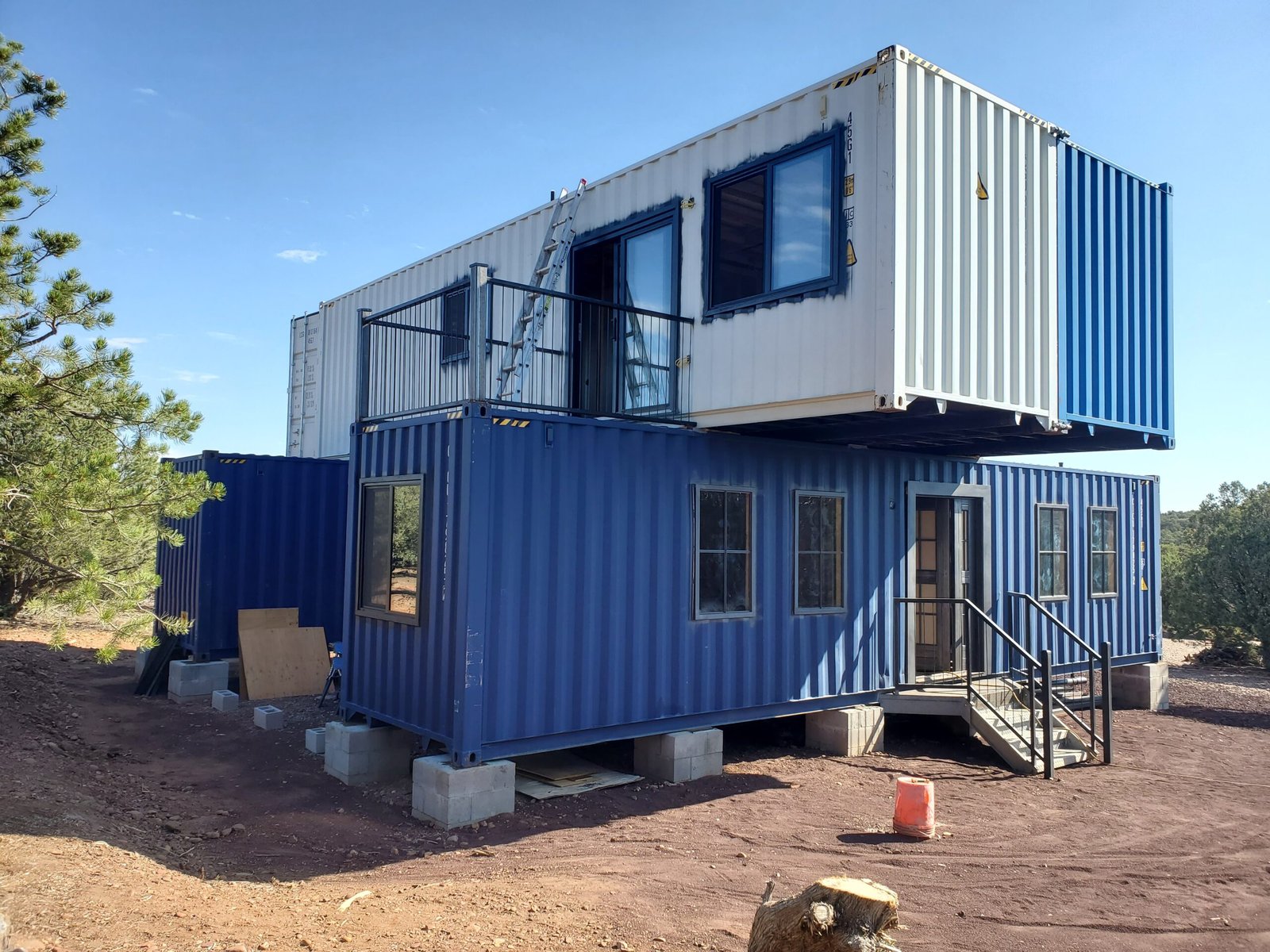
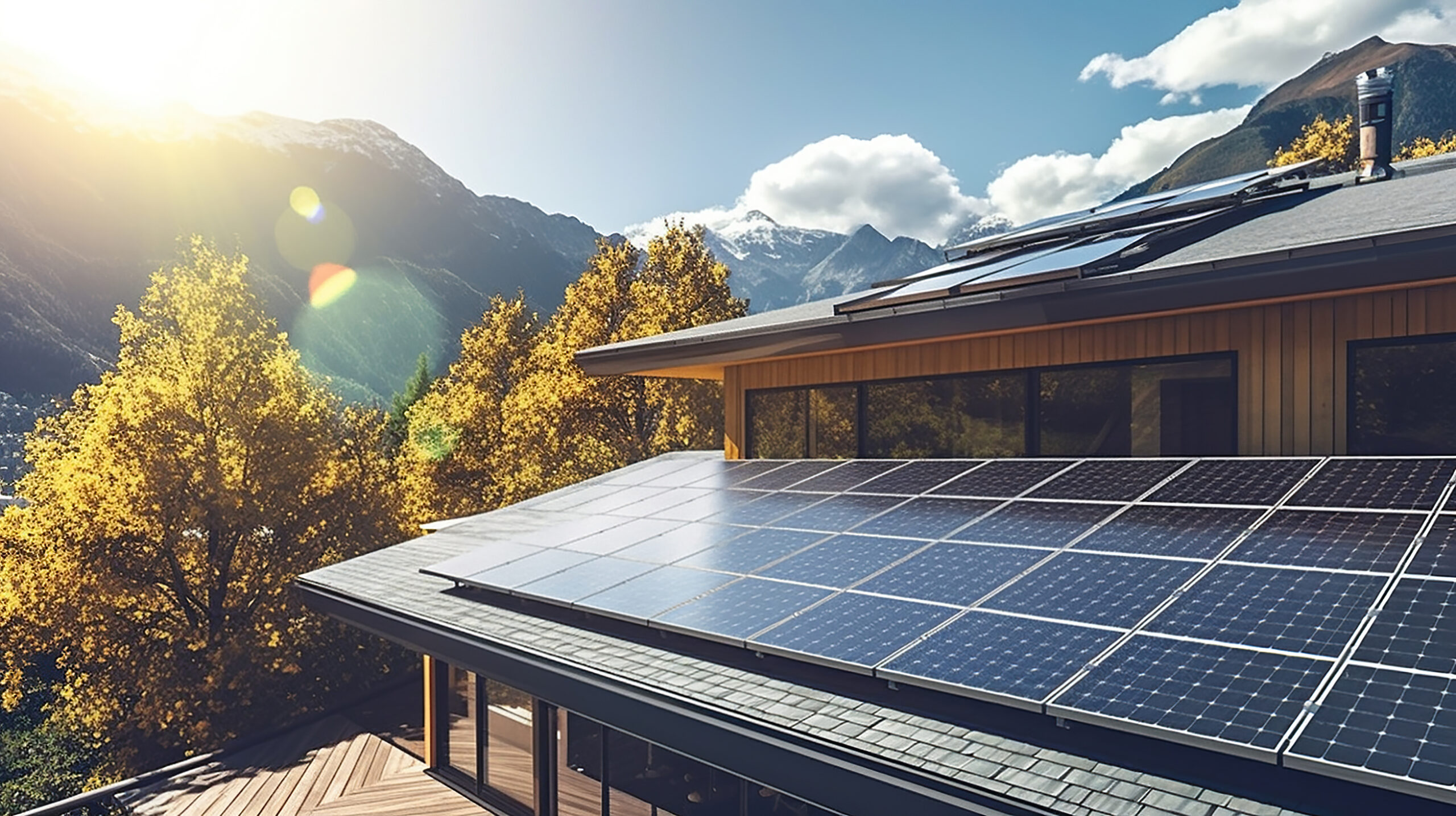
Are you considering a custom container home in Apache, Arizona? Shipping container homes offer a sustainable, versatile, and affordable housing option. Whether you’re looking to build with a single container or create a spacious layout with multiple units, here are five essential tips for building a 5-container home, brought to you by our licensed engineering experts. 1. Check Building Codes and Permitting Requirements for Apache Building codes for container homes vary across Arizona, and Apache is no exception. Compliance with local building codes is crucial, especially as requirements may differ based on the number of containers used. For a 5-container layout, our engineers will ensure that your plans meet Apache’s specific structural and zoning regulations, making the permitting process smoother and quicker. 2. Design for Climate-Appropriate Insulation and Ventilation A well-insulated container home is essential, especially in Apache’s diverse climate. For a larger 5-container home, efficient insulation and ventilation are even more crucial to maintain comfortable temperatures throughout your home. We consider Apache’s climate specifics to recommend the best materials and methods, making sure your container home is energy-efficient and comfortable year-round. 3. Select a 5-Container Layout that Fits Your Lifestyle The number of containers you choose significantly influences your home’s layout and functionality: 1-Container Layout: Ideal for minimalistic living, backyard ADUs, or a small studio. 2-Container Layout: Adds room for a bedroom or small living area, perfect for a tiny home. 3-Container Layout: A compact family setup with space for bedrooms and living areas. 4-Container Layout: A full home with options for larger kitchens, multiple bedrooms, and even a home office. 5-Container Layout: Provides a spacious residence with multiple rooms and unique configurations. Our team will guide you in selecting the optimal layout for your 5-container home, helping you achieve both aesthetic appeal and functional design. 4. Incorporate Energy-Efficient and Sustainable Options InApache, Arizona’s abundant sunshine makes solar panels an ideal addition to your container home. With a larger 5-container setup, you can also consider installing energy-efficient appliances and sustainable upgrades like rainwater harvesting. Our engineers provide solutions to seamlessly integrate these features, reducing both environmental impact and utility costs. 5. Partner with a Licensed Engineering Team for Certified, Custom Designs Each container home we design is tailored to specific needs, compliant with Apache codes, and certified for structural integrity. Our licensed engineers specialize in 5-container configurations, providing permit-ready plans that account for your local regulations, durability, and safety standards. When you work with us, you gain the assurance of a certified, expertly crafted design that is ready for construction. Get Started on Your 5-Container Dream Home in Apache! If you’re ready to take the first step toward building a 5-container home in Apache, Arizona, contact Oasis Engineering today. From single-container setups to expansive multi-container homes, we deliver custom-engineered plans that bring your vision to life. Embrace a sustainable, affordable future with a custom container home designed to meet your unique needs.

5 Expert Tips for Engineering a 5-Container Home in Apache, Arizona Read More »