St. Petersburg Engineer Affidavit: Verifying Stucco Wire Lath Without Demolition
November 19, 2026 · Enrique Lairet, PE
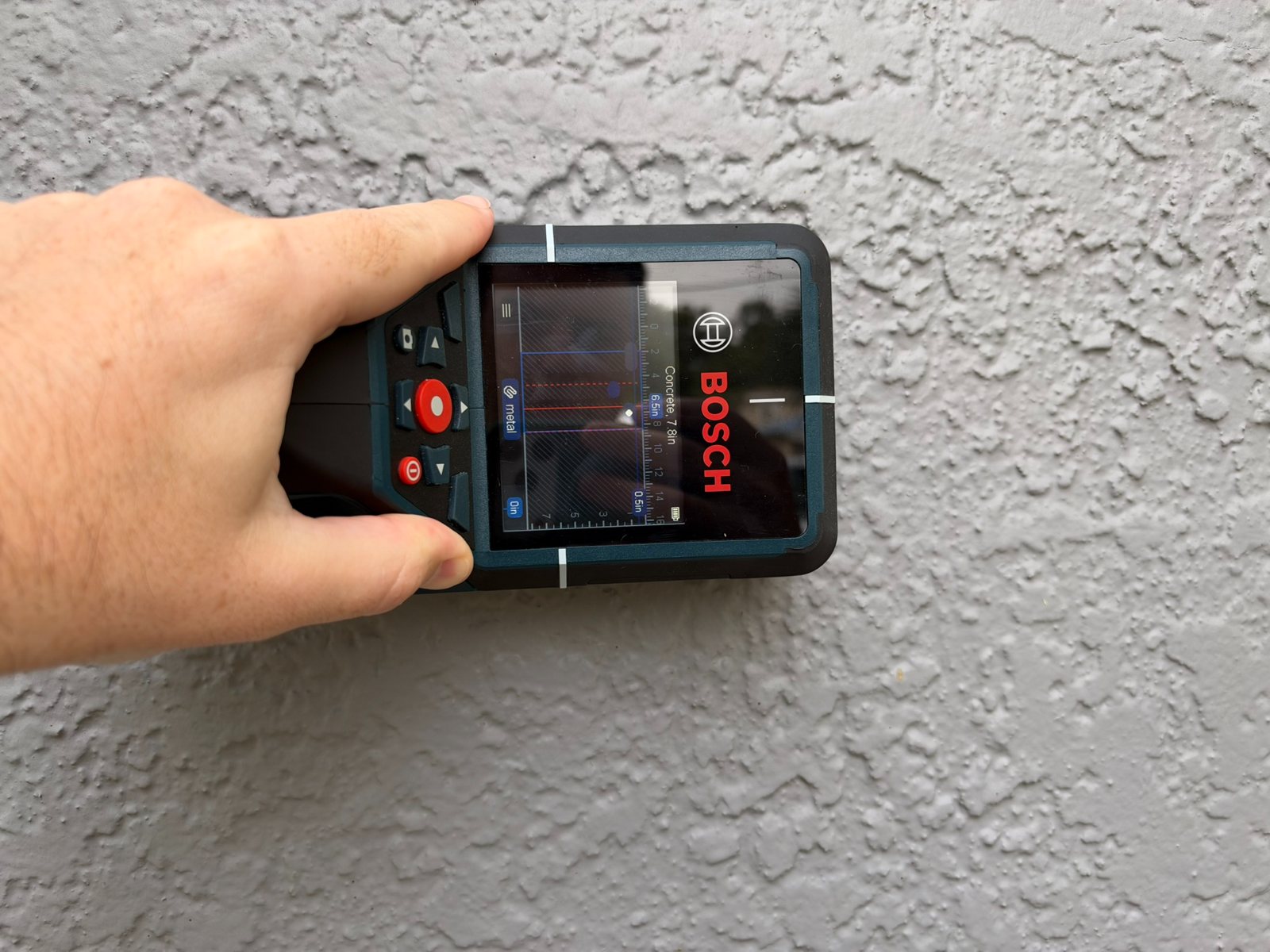
How Oasis Engineering uses non-invasive inspection technology to help property owners resolve older permits and concealed construction issues in St. Petersburg, Florida.
The Challenge: An Open Stucco Permit
An existing property in St. Petersburg, Florida, had an unresolved building permit involving exterior stucco work. The City required verification that metal wire lath had been installed beneath the stucco before the permit could be closed.
The challenge? The stucco was already finished, and the underlying metal reinforcement was concealed.
Traditionally, verifying concealed construction may require removing portions of the finished material to expose the components underneath. However, removing stucco can be expensive, disruptive, and potentially unnecessary when appropriate non-invasive inspection methods are available.
The property owner needed a Florida-licensed engineer to evaluate the existing conditions and determine whether an engineering affidavit could be provided to support the City's permit closeout process.
Our Approach: Non-Invasive Stucco Inspection
Oasis Engineering performed an on-site evaluation using a Bosch D-TECT 200 C professional wall scanner, a specialized instrument designed to detect concealed objects, including metallic components, within various building materials.
During the inspection, the scanner was used across accessible areas of the exterior stucco walls to identify metallic indications consistent with the presence of embedded wire lath.
The instrument detected numerous metallic responses throughout the scanned areas, supporting the conclusion that metal reinforcement was present beneath the finished stucco surface.
This approach allowed us to evaluate the concealed material without cutting openings or removing sections of the existing stucco.
Importantly, while scanning technology can help identify concealed metallic materials, it does not independently establish every aspect of installation compliance, including fastening patterns, overlaps, corrosion, or substrate conditions. These considerations must be addressed based on the specific scope of the engineering evaluation.
What the Scanner Shows
The scanner provides a visual indication of detected objects and their approximate location or depth, allowing the engineer to evaluate conditions that would otherwise be hidden from view.
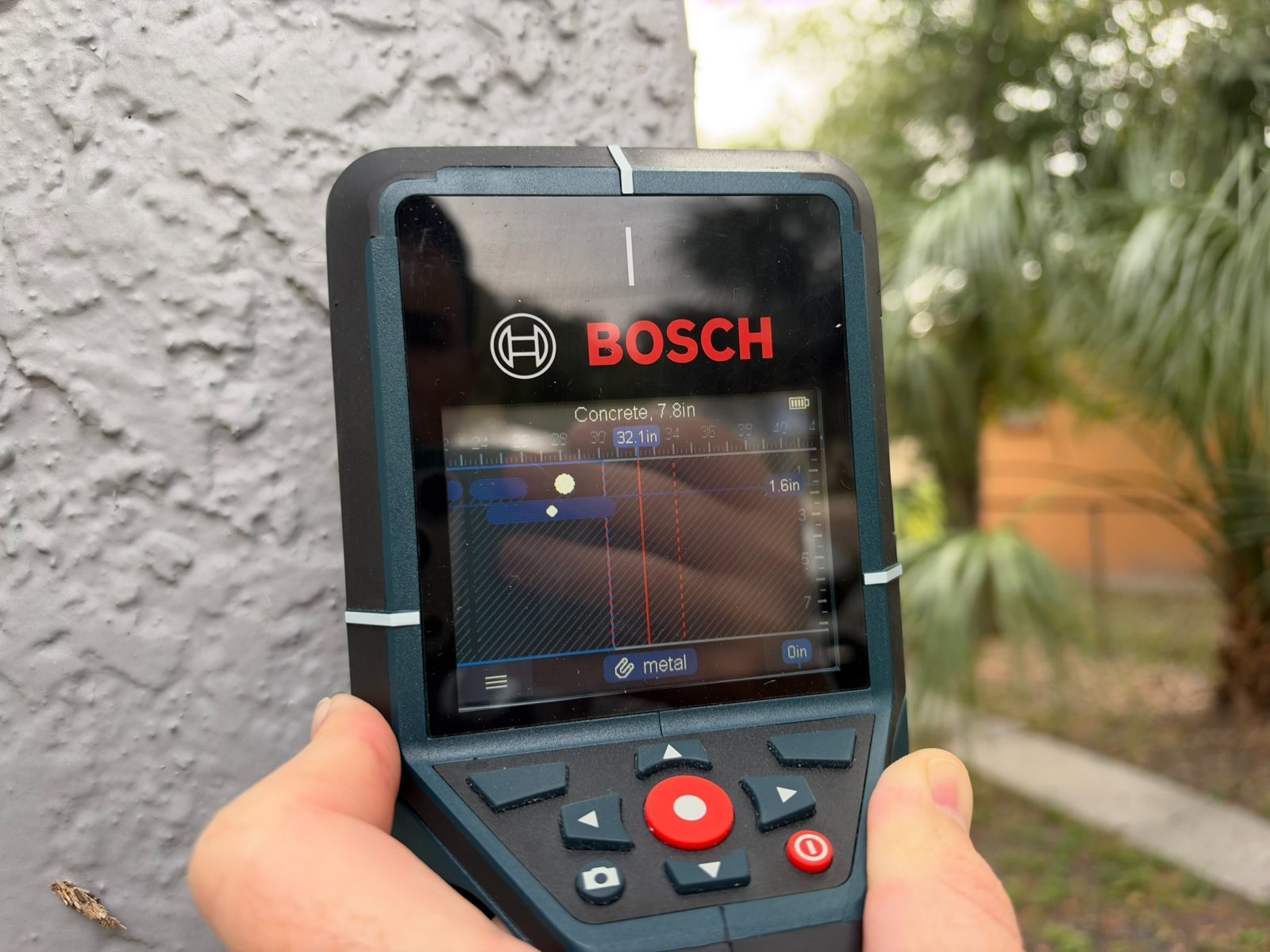
Non-invasive scanning can be particularly useful when original construction photographs or inspection records are unavailable.
Why Would the City of St. Petersburg Require an Engineer Affidavit?
When construction work is completed without the required inspections, or when an older permit remains open, the City of St. Petersburg may require additional documentation before approving permit closure.
Depending on the circumstances, the City may accept an Affidavit Inspection Report signed and sealed by a Florida-licensed professional engineer or registered architect.
For the stucco project discussed here, the City identified an affidavit inspection process involving inspection codes 0105, 0129, and 0196.
The City's requirements referenced the 2023 Florida Building Code, 8th Edition, including Sections 105.14 and 107.6, together with applicable Florida professional licensing and signing-and-sealing requirements.
An engineering affidavit is not simply a signature on a form. The design professional must perform an appropriate evaluation and have sufficient supporting evidence for the specific statements being certified.
Can an Engineer Verify Stucco Without Removing It?
In certain circumstances, yes.
A Florida professional engineer may use a combination of visual observations, non-destructive testing equipment, available construction records, photographs, and professional engineering judgment to evaluate existing conditions.
For example, a non-invasive metal scanner can provide supporting evidence of concealed wire lath beneath stucco.
However, detecting metal does not automatically confirm that the complete stucco assembly complies with applicable building codes.
Whether an affidavit can be issued depends on the observed conditions, available evidence, scope of the required inspections, and the engineer's professional judgment.
Some projects may still require selective exploratory openings, additional testing, or documentation from the original contractor.
Engineering Solutions for Older and After-the-Fact Permits
At Oasis Engineering, we understand that many property owners encounter permitting problems years after construction has been completed.
These issues frequently arise during property sales, renovations, insurance reviews, or municipal permit audits.
Our goal is to identify practical, code-conscious solutions using available documentation and modern inspection technology whenever appropriate.
Depending on the project, our services may include:
- Engineer affidavits for concealed or previously completed construction.
- After-the-fact permit engineering evaluations.
- Stucco and exterior wall inspections.
- Non-invasive evaluation of concealed building components.
- Engineering letters and reports for municipal permit compliance.
- Coordination with building departments regarding inspection and documentation requirements.
Each project is evaluated individually, and acceptance of any engineering affidavit remains subject to the applicable building department.
Need an Engineer Affidavit in St. Petersburg, Florida?
If you have an open permit, missed inspection, or concealed construction issue in St. Petersburg or the surrounding Tampa Bay area, Oasis Engineering may be able to help.
A Florida-licensed professional engineer evaluates the existing construction and prepares engineering letters, reports, and affidavits when supported by the available evidence.
Contact Oasis Engineering to discuss your project and determine whether a non-invasive engineering inspection may be an appropriate solution.
Engineering letters: engineerletters.co
Disclaimer: This article describes an engineering inspection methodology used on an existing building. Non-invasive scanning does not guarantee identification of all concealed conditions or establish full code compliance. Engineering findings and the availability of an affidavit depend on the specific project conditions and applicable municipal requirements.
Related
Nov 4, 2026 · Case study
Missed HVAC Final Inspection in New Port Richey, Florida: Engineer Letter and Site Visit
Oct 22, 2026 · Case study
The beam that was "already approved": a screen porch to sunroom conversion, reviewed remotely

Aug 3, 2025 · Case study