South Carolina manufactured homes: title, county decal, moving permit, and when you need a foundation letter
October 21, 2026 · Enrique Lairet, PE
In South Carolina a manufactured home is owned and transferred by a title from the SCDMV, like a car, until the owner files an affidavit that retires that title and makes the home part of the land. Along the way the county assessor licenses the home and issues a decal, the power company will not connect electricity without proof of that license, and the home cannot be moved without a county moving permit. None of those steps asks for an engineer. The step that does is the loan: FHA, VA and USDA lenders want the home on a permanent foundation certified by a licensed engineer, and in South Carolina that usually happens at the same time as de-titling.
Who owns a manufactured home in South Carolina?
Whoever is on the SCDMV certificate of title. S.C. Code Title 56, Chapter 19 treats a manufactured home as a titled vehicle: it is bought, sold, financed and liened through the Department of Motor Vehicles. A deed to the land does not carry the home with it, and a bill of sale for the home does not touch the land. Buyers who assume a manufactured home conveys with the lot are the most common source of trouble we see in these files.
The one exception is a home whose title has been retired under S.C. Code §56-19-510 (below). After that, the home is real property and goes with the deed.
What is the county license and decal?
S.C. Code §31-17-320 requires the owner, within 15 days of bringing a home into a county, buying one, or moving one between counties, to obtain a license from the county. Counties handle this through the assessor's office. The license is good until the home is sold or relocated (§31-17-340); a new owner has 15 days to get a new one (§31-17-350). The license is shown by a decal that must be visible from outside the home.
The license is what unlocks power. Under §31-17-320 the electric supplier must have proof that the county license fee was paid before connecting electricity. A home sitting on a lot with no decal is a home with no meter.
In practice the sequence is: title (or title application) at the SCDMV, then license and decal at the assessor, then the utility. Skipping the title step stalls the license; skipping the license stalls the power.
Can I move a manufactured home myself?
Not without a permit. S.C. Code §31-17-360 and §31-17-370 require a moving permit from the county licensing agent before a home is relocated. The county treasurer certifies that no property taxes are owed; if the home is leaving the county, the whole year's taxes must be paid first. The assessor notifies the electric supplier, the permit travels with the home, and in the new county the owner has 15 days to present it and license the home again (§31-17-380). Moving a home without the permit is a misdemeanor (§31-17-400).
Two things to know before you move one. First, the state installation standards apply at the new site: piers, footings, anchors and tie-downs are inspected under the Manufactured Housing Board rules, and most counties will not issue a set-up or electrical final without that inspection. Second, a move can end the home's eligibility for an FHA loan. HUD's rules require that an FHA-financed manufactured home was moved directly from the manufacturer or dealer to the site where it sits; a home that has been installed somewhere else first is generally out, no matter how good the new foundation is. Ask before you move, not after.
What does "retiring the title" (de-titling) do?
It turns the vehicle into real estate. Under S.C. Code §56-19-510 the owner of the land files a Manufactured Home Affidavit for Retirement of Title Certificate with the county register of deeds (or clerk of court), with proof of ownership of the land. The affidavit is recorded like a deed and the assessor is notified. The owner then mails the stamped affidavit, the original SCDMV title, lien releases, a paid property-tax receipt and the fee (up to $50 under §56-19-520) to the SCDMV, which records the retirement and confirms it in writing (§56-19-530). From that point the home is taxed and conveyed with the land.
The statute's definition of "affixed" is modest: wheels, axles and towing hitch removed, installed under the state standards (§56-19-500). It does not say "permanent foundation." That gap between what South Carolina requires to de-title and what a lender requires to lend is where the engineer comes in.
Where does the engineer's foundation letter fit?
FHA (HUD Handbook 4000.1), VA and USDA all require two things that South Carolina's own process does not: the home must be classified as real property, and it must sit on a permanent foundation that meets HUD's Permanent Foundations Guide for Manufactured Housing (PFGMH), certified by a licensed professional engineer. Conventional lenders selling to Fannie Mae or Freddie Mac ask for the same.
So a typical South Carolina closing on a manufactured home looks like this:
- The title is retired under §56-19-510 so the home is real property (the attorney or closer handles this; South Carolina closings go through an attorney).
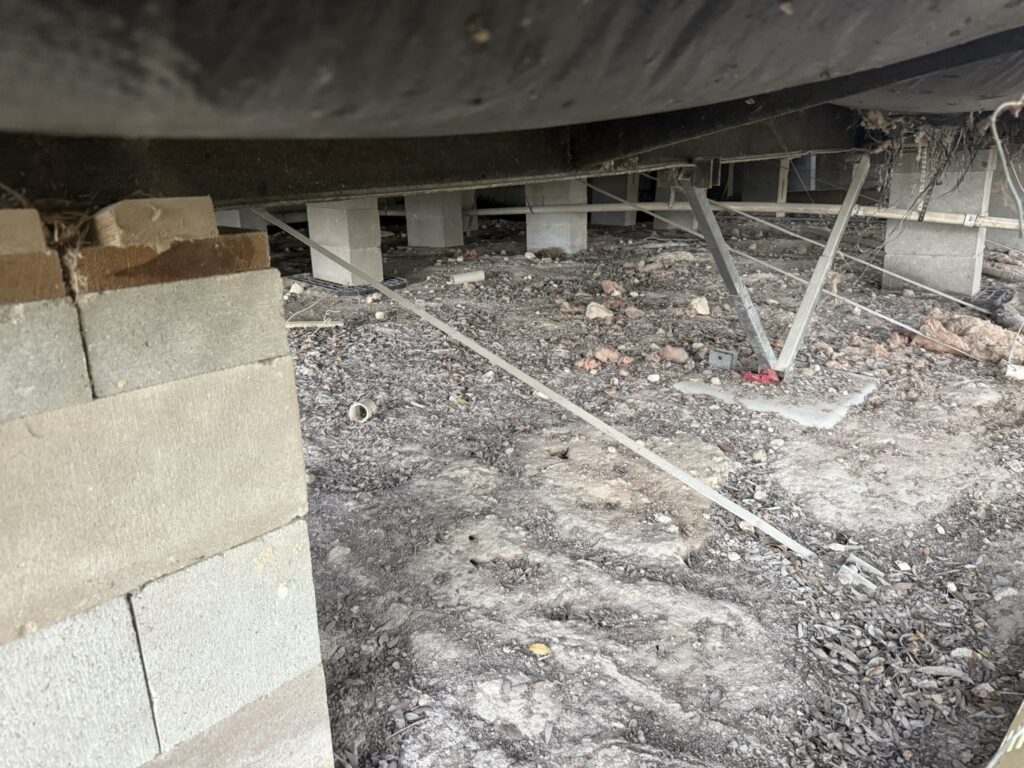
- A South Carolina-licensed engineer inspects the foundation, or reviews photos and measurements of it, against the PFGMH: footings, piers, anchoring, the perimeter enclosure, and whether the wheels, axles and hitch are gone.
- The engineer issues a sealed certification letter stating the foundation meets the PFGMH, or listing what has to change first.
- The lender files the letter with the appraisal; the underwriter clears the condition.
The letter certifies the foundation, not the paperwork: it does not retire the title, license the home or replace the county set-up inspection. But it is the only one of the four documents in this article that a lender will refuse to close without.
What usually fails?
The same three things in most states, South Carolina included. The anchoring is the installer's tie-down set, which keeps the home from blowing over but does not resist the lateral and uplift loads the PFGMH assumes for a permanent foundation; adding engineered anchors or a few concrete footings fixes it. The perimeter enclosure is vinyl skirting with no footing, where the Guide expects a wall on a footing or an engineered alternative. And the hitch is still on the home. Each is a days-of-work correction, not a tear-out, and the letter can be issued as approved with corrections so the closing timeline survives.
How to line the steps up
If you are buying with a government-backed loan, order the foundation certification early, before the title retirement is filed. If the foundation needs work, you want to know while the seller is still at the table. If you are selling, retiring the title and getting the letter in hand before listing removes the two conditions most likely to delay a buyer's closing. And if the home has ever been moved, say so on the order form; the answer changes which loan programs are open.
Our manufactured home foundation certification is a flat $450 and is usually issued in one to two business days once we have the photos or the inspection. South Carolina is one of the states where our engineers are licensed; the county steps above are yours (or your closing attorney's), and we will tell you plainly if the foundation is not there yet.
This article summarizes South Carolina statutes as of October 2026 (S.C. Code Title 31 Chapter 17 and Title 56 Chapter 19, Article 4) and HUD Handbook 4000.1. It is general information, not legal advice; county procedures and fees vary, so confirm with the assessor and your closing attorney.
Related